
Joint Health, Injury Prevention, and Longevity in Women 30+
Long-term joint health depends on more than strength alone.
For women, joint health is influenced by a combination of biomechanics, hormonal factors, training history, and recovery practices.
When training develops strength without supporting joint health, short-term progress can come at the cost of long-term durability.
Joints Depend on the Tissues Around Them
Joints do not generate force themselves — they transmit it.
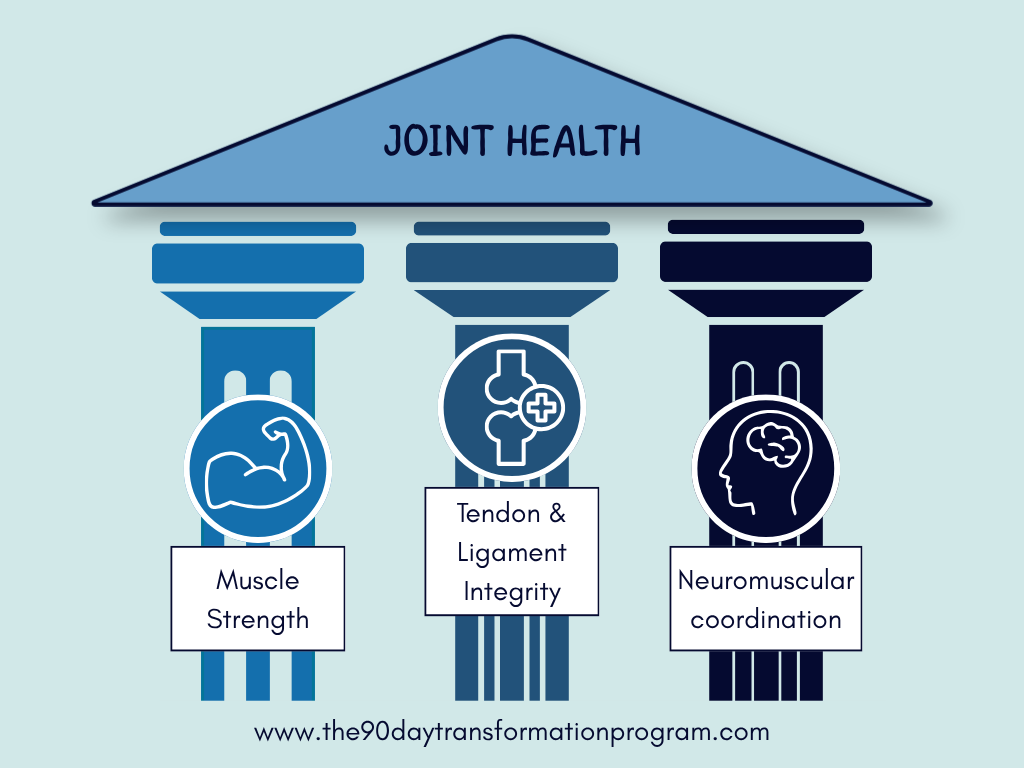
Their stability and function depend on the surrounding structures:
Muscle strength
Tendon and ligament integrity
Neuromuscular coordination
If just one of these systems are weak, fatigued, or poorly controlled, your joints absorb more stress than they are designed to tolerate. Over time this can contribute to irritation, inflammation, and overuse injuries.
Hormonal Variability Influences Joint Stability
For women, connective tissue behavior is influenced in part by hormonal fluctuations.
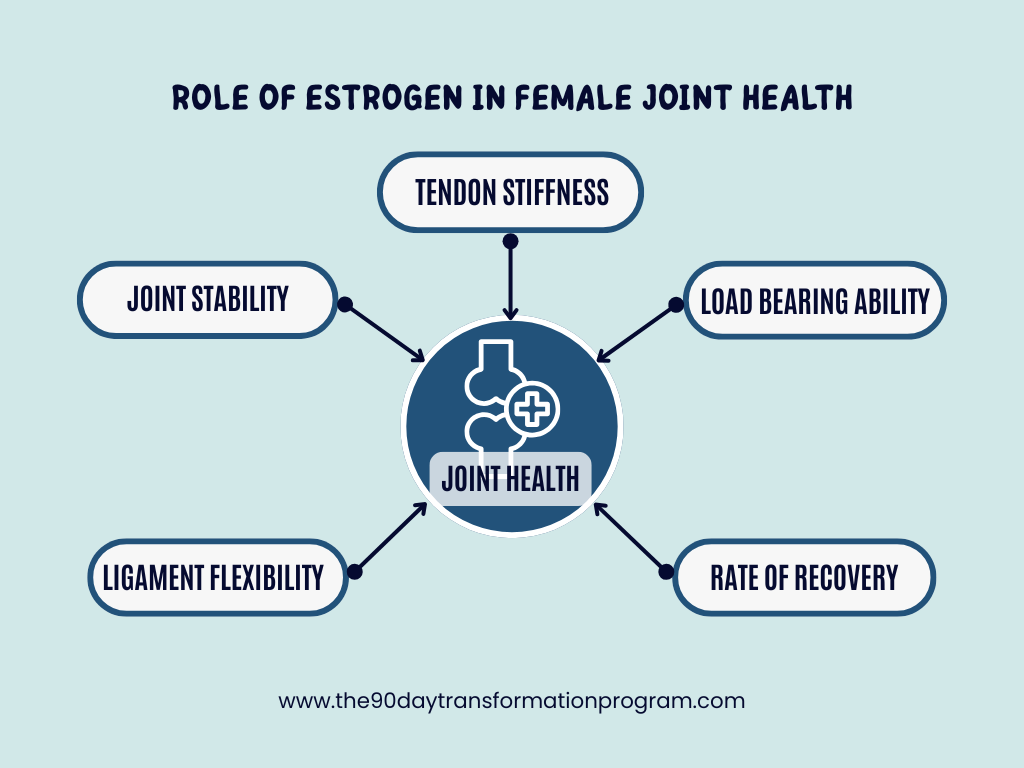
Changes in your estrogen levels can affect:
Ligament laxity
Tendon stiffness
Joint stability
These shifts are normal, but they can influence how joints tolerate load.
Training that emphasizes controlled movement and gradual progression helps maintain stability during these natural variations.
Resistance Training Protects Joints
Appropriately designed resistance training strengthens more than muscle.
Progressive loading improves the capacity of:
Tendons
Ligaments
Joint stabilizing muscles
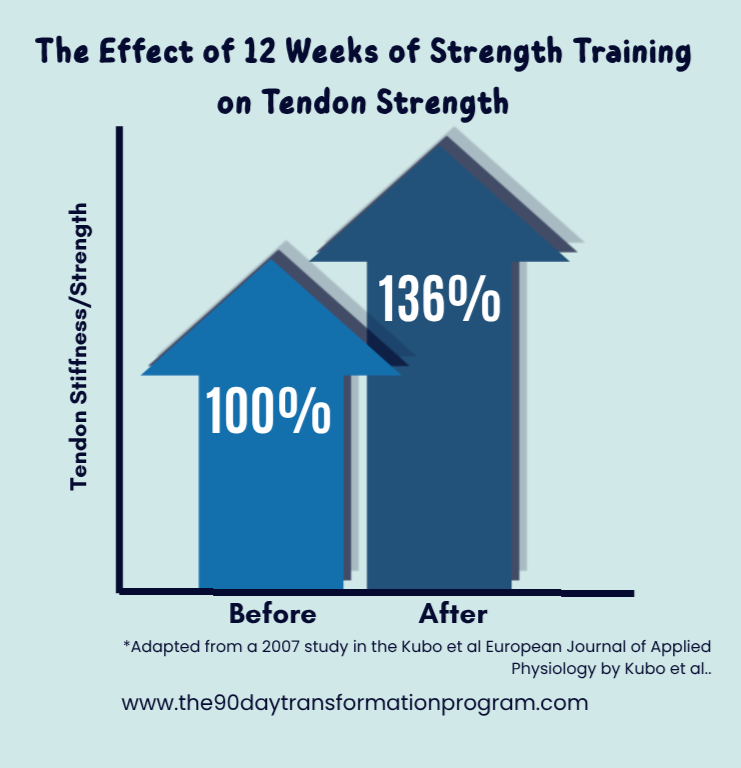
Studies show that resistance training can increase tendon stiffness/strength by more than 30%, improving the ability of connective tissue to tolerate force and stabilize joints.
These tissues adapt more slowly than muscle but become more resilient with consistent exposure to load. Avoiding resistance training out of fear of injury often produces the opposite effect — weaker tissues that are less capable of handling everyday stress.
Movement Quality Matters
Strength alone does not guarantee joint health.
Poor movement patterns can place uneven stress on joints and surrounding tissues. Over time, compensations in movement can accumulate and increase injury risk.
Training should prioritize:
Proper joint alignment
Controlled tempo
Balanced movement patterns
Full range of motion
This helps to distribute forces more efficiently and protects connective tissue.
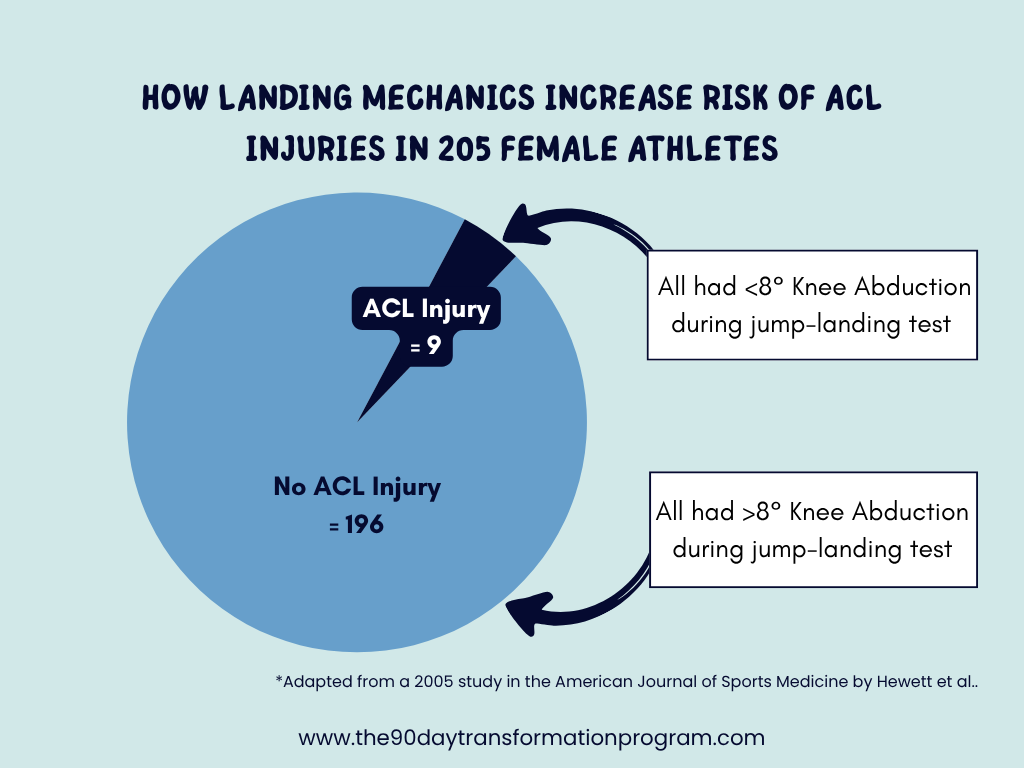
For example, a study of 205 female athletes found that the risk of ACL injuries was directly correlated with the knee abduction angles of their landing mechanics. Of these 205 athletes, nine athletes had a confirmed anterior cruciate ligament rupture; significantly, these 9 athletes had greater knee abduction angles (more than 8 degrees) during the landing test compared to the uninjured athletes.
This shows us that body mechanics and movement quality play a massive role in reducing the risk of a joint injury.
Recovery Protects Connective Tissue
Connective tissue adapts more slowly than muscle and requires adequate recovery between loading sessions.

When training volume increases too quickly or recovery is insufficient, small amounts of tissue stress can accumulate faster than the body can repair them. Managing training volume and allowing time for recovery helps prevent this accumulation.
Longevity Requires Durability
Training for longevity prioritizes durability rather than extremes.
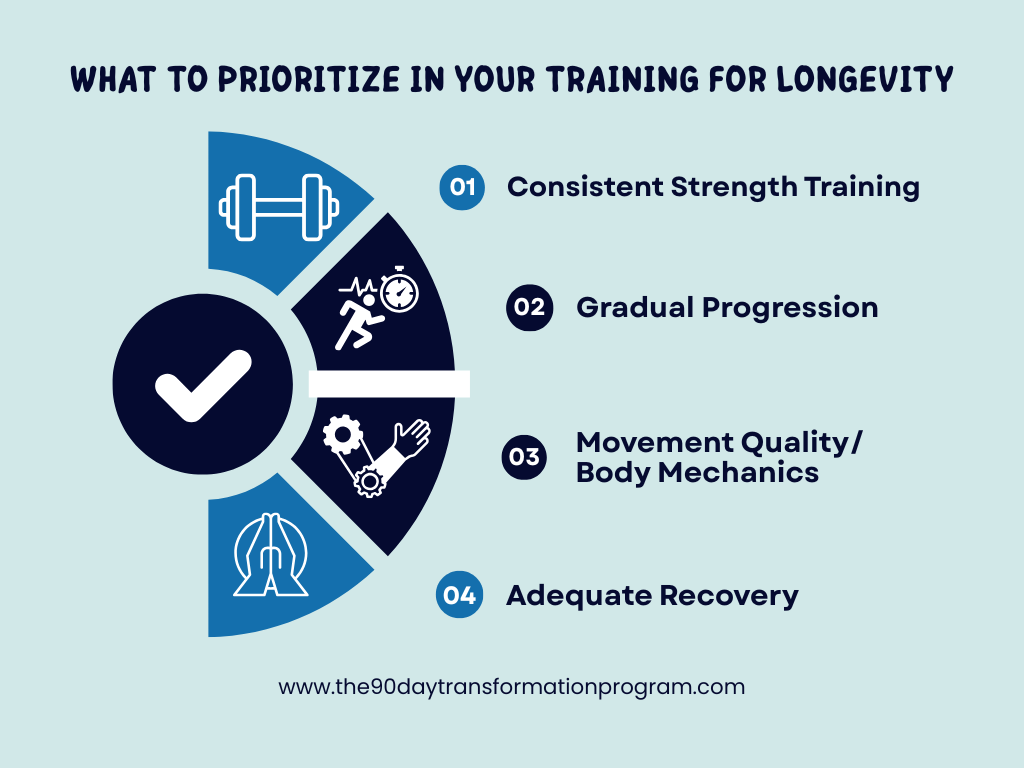
This means emphasizing:
Consistent strength training
Gradual progression of load
Movement quality
Adequate recovery
These factors help maintain joint function, reduce injury risk, and support physical independence later in life.
In Summary
Joint pain is not an inevitable consequence of aging!
Many joint-related issues stem from inadequate strength, poor movement mechanics, or inappropriate training progression.
Strength training that focuses on gradual progression and proper movement mechanics builds joints that are capable of tolerating stress, supporting movement, and maintaining resilience across the lifespan.
Durability, not fragility, becomes the outcome.
References
Bickel, C. S., Cross, J. M., & Bamman, M. M. (2011). Exercise dosing to retain resistance training adaptations in young and older adults. Medicine & Science in Sports & Exercise, 43(7), 1177–1187.
Hewett, T. E., Myer, G. D., & Ford, K. R. (2005). Biomechanical measures of neuromuscular control and valgus loading of the knee predict anterior cruciate ligament injury risk in female athletes: A prospective study. The American Journal of Sports Medicine, 33(4), 492–501.
Kubo, K., Kanehisa, H., Kawakami, Y., & Fukunaga, T. (2001). Influence of static stretching on viscoelastic properties of human tendon structures in vivo. Journal of Applied Physiology, 90(2), 520–527.
Lauersen, J. B., Bertelsen, D. M., & Andersen, L. B. (2014). The effectiveness of exercise interventions to prevent sports injuries: A systematic review and meta-analysis of randomised controlled trials.British Journal of Sports Medicine, 48(11), 871–877.
Watson, S. L., Weeks, B. K., Weis, L. J., Horan, S. A., & Beck, B. R. (2018). Heavy resistance and impact training improves bone mineral density and physical function in postmenopausal women with low bone mass: The LIFTMOR randomized controlled trial. Journal of Bone and Mineral Research, 33(2), 211–220.
Leblanc, D. R., Schneider, M., Angele, P., Vollmer, G., & Docheva, D. (2017). The effect of estrogen on tendon and ligament metabolism and function. Sports Medicine, 47(6), 1015–1024.