
Why Building Muscle Is A Non-Negotiable For Women After 30

For women over 30, the goal shouldn’t be to be smaller — it should be to feel stronger, leaner, and more in control of their body again.
Yet, for many women, this is often the stage of life when:
Fat loss feels harder
Energy feels lower
The same strategies that “used to work” stop working
Sound familiar?
This isn’t a motivation problem. It’s physiology.
From your 30s onward, muscle becomes one of the most important determinants of body composition, metabolic health, and aging well — especially for women.
Muscle Is What Prevents Age-Related Metabolic Decline
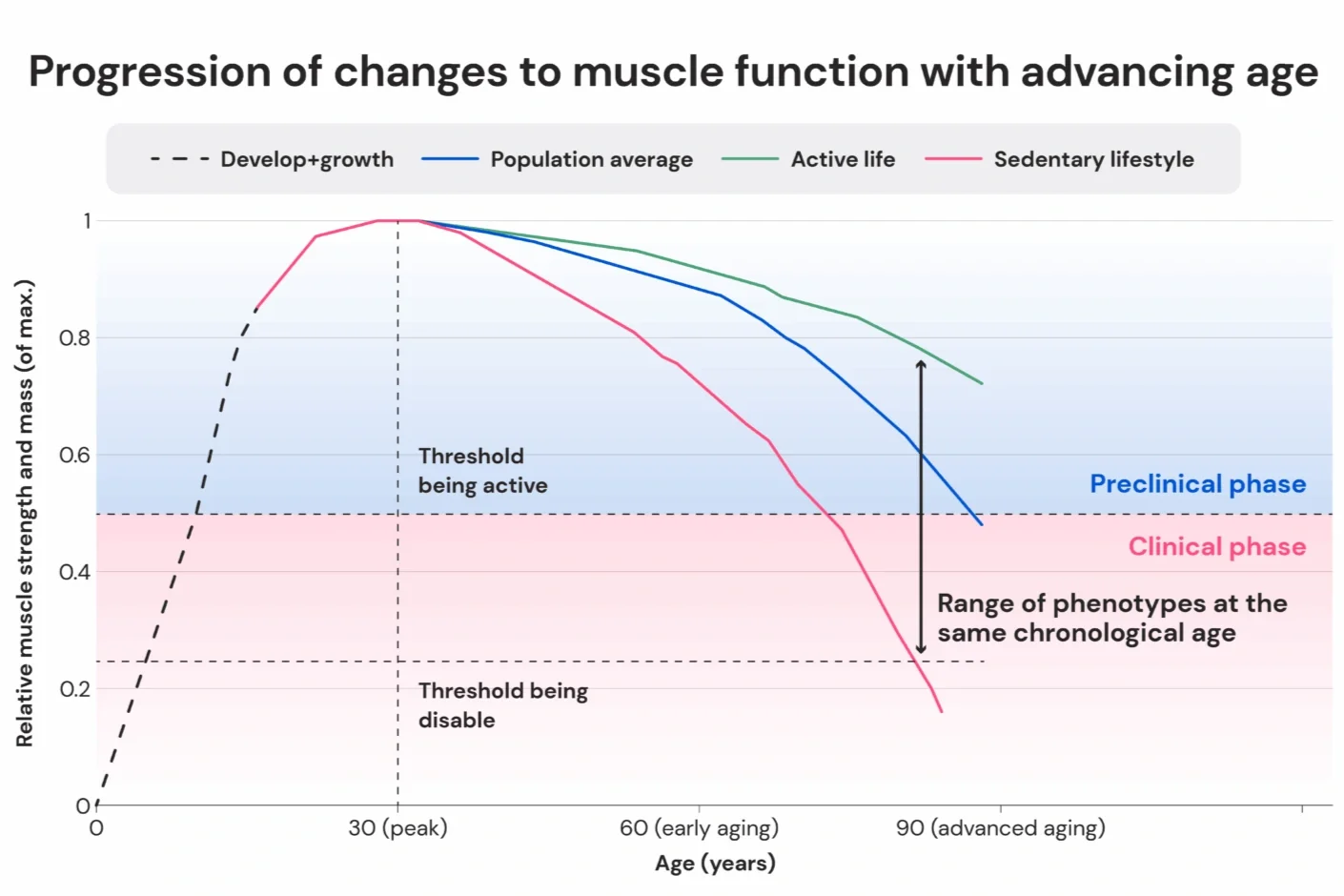
This graph shows the typical trajectory of muscle strength and mass across the lifespan. Indicating a significant range in relative strength and muscle mass, depending on one’s lifestyle.
From Gustafsson and Ulfhake (2024)
From around age 30, adults begin to lose muscle mass at a rate of approximately 3–8% per decade, a process known as sarcopenia. Research shows this decline can be accelerated by:
Sedentary lifestyles
Chronic dieting
Excessive cardio without resistance training
A loss of muscle mass can often lead to women experiencing:
Reduced resting metabolic rate
Increased fat storage
Decreased insulin sensitivity
Training strategies that rely heavily on calorie restriction and endurance exercise often worsen these outcomes for women.
Building and maintaining muscle helps preserve metabolic rate and protects against age-related fat gain.
Muscle Is Critical for Hormonal Health in Women Over 30
Muscle tissue plays a central role in how the body handles glucose and insulin.
Peer-reviewed research shows that increased skeletal muscle mass:
Improves insulin sensitivity
Enhances glucose uptake independent of insulin
Reduces the likelihood of excess energy being stored as fat
This becomes increasingly important as women move toward perimenopause (late 30s -40s), when estrogen fluctuations can impair carbohydrate tolerance and increase central fat storage.
Resistance training has been shown to improve metabolic health even without significant weight loss, making it a powerful tool for women who feel “stuck” despite eating well and exercising regularly.
Muscle Is What Creates a Lean, Defined Shape — Not Weight Loss Alone
Weight loss without resistance training often leads to:
Muscle loss
A softer appearance
Decreased strength and function
Studies consistently show that fat loss combined with resistance training preserves lean mass, while dieting alone does not.
For women over 30, this matters because:
Muscle creates shape and structure
Fat loss reveals muscle, not the other way around
A “toned” look is the result of muscle plus reduced body fat
Muscle does not make women bulky — it prevents the softness and muscle atrophy that often accompanies traditional dieting.
Muscle Protects Bone Density and Joint Health
Women begin to experience gradual declines in bone mineral density from their early 30s, with risk increasing significantly during perimenopause and menopause.
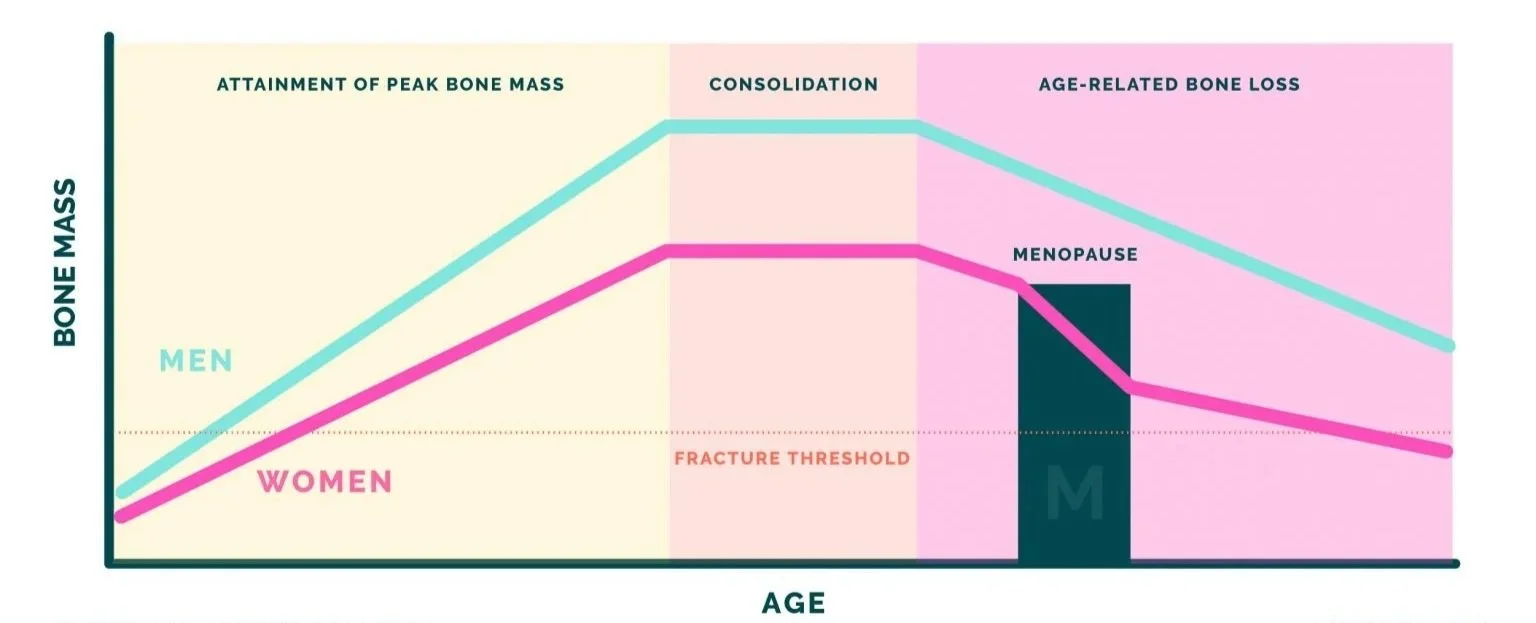
This graph from the Journal of Clinical Endocrinology shows how bone mineral density is affected by age and gender.
Resistance training provides mechanical loading that:
Stimulates bone formation
Slows age-related bone loss
Improves joint stability and connective tissue strength
Research supports resistance training as one of the most effective non-pharmacological strategies for reducing osteoporosis risk in women.
Strength training is one of the best ways in increase bone density. And as a result, one of the best things you can do to reduce the risk of fractures, particularly later on in life.
Muscle Improves Energy, Confidence, and Quality of Life
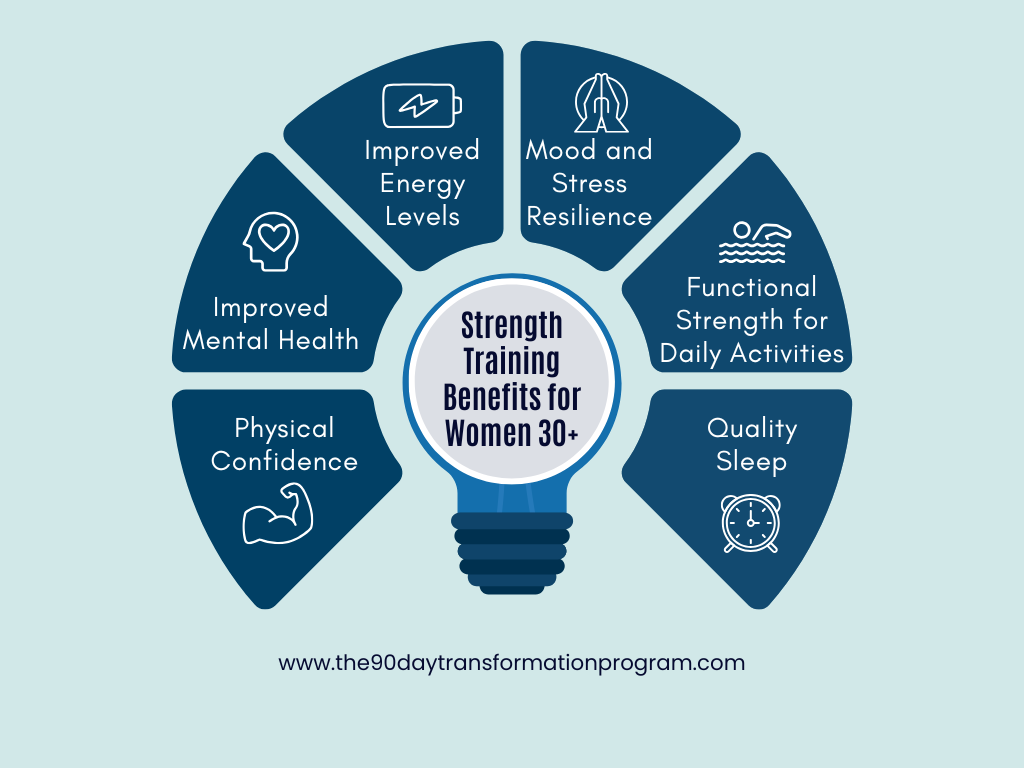
Beyond physiology, resistance training has been shown to improve:
Physical confidence
Mood and stress resilience
Perceived energy levels
Functional strength for daily life
Women who train for strength often report feeling:
More capable
Less fragile
More confident in their body’s ability to handle stress
We should emphasize training that supports the female nervous system, rather than depleting it.
How We Approach Muscle Building in The 90 Day Transformation Program™
When it comes to training for women over 30, more is not always better — better is better.
Our approach to muscle building is:
Progressive, not aggressive
Structured, not random
Designed around recovery and adaptation
We prioritize:
Proper movement mechanics
Gradual increases in load and intensity
Training phases that respect hormonal and connective tissue recovery
Strength training as the foundation — not an add-on
This allows women to build lean muscle without burnout, excessive soreness, or fear of “doing too much.”
In Summary: Ladies! Muscle is Not Optional After 30
For women over 30, muscle should not be viewed as a secondary outcome or aesthetic concern. It is a central determinant of:
Metabolic Health
Hormonal Health
Bone Health
Muscle provides a foundation for fat loss, longevity, and confidence.
Building and maintaining lean muscle supports fat loss, protects skeletal health, and improves physical resilience across the lifespan.
It is the key to a better quality of life, for longer.