
Why Women Commonly Under-Eat Without Realizing It
Under-eating is often assumed to be a conscious choice driven by dieting or restriction.
In practice, many women consume less energy than their bodies require without intending to. This is particularly common in women who exercise regularly, eat “healthy,” or have a history of dieting.
The issue is not always what is being eaten — but whether intake matches total physiological demand.
Energy Needs Are Dynamic, Not Fixed
Energy needs are determined not only by body size, but by total daily demands.

They increase with:
Training volume and intensity
Psychological stress
Sleep quality
Recovery demands
When these inputs rise without a corresponding increase in intake, energy availability declines — even if meals appear balanced and nutritious.
How “Healthy Eating” Can Still Lead to Low Intake
Under-eating often develops through common dietary patterns rather than extreme restriction.

Examples include:
Skipping meals due to schedule constraints.
Delaying the first meal of the day.
Consuming low-energy breakfasts.
Relying heavily on low-calorie, high-volume foods - These foods are not bad! However, diets emphasizing low-energy-density foods such as vegetables, salads, and lean proteins can be nutritionally rich yet insufficient in total energy.
Avoiding carbohydrates or fats.

While these practices are often framed as health-promoting, it is important to remember that not all the studies that support these practices for weight loss are performed on women over 30.
These patterns can reduce total energy intake unintentionally, especially when combined with regular training.
Appetite Does Not Always Reflect Need
Hunger is not always a reliable indicator of energy requirements.
For some individuals. Exercise can temporarily suppress appetite, and stress can further blunt hunger signals. As a result:
Meals may be delayed or smaller than required.
Post-training fueling may be insufficient.
Intake may not increase despite higher energy expenditure.
Over time, this creates a consistent gap between intake and demand.
This gap in energy intake compared to demand has negative effects on appetite regulation and can lead to delayed, exaggerated hunger later in the day.
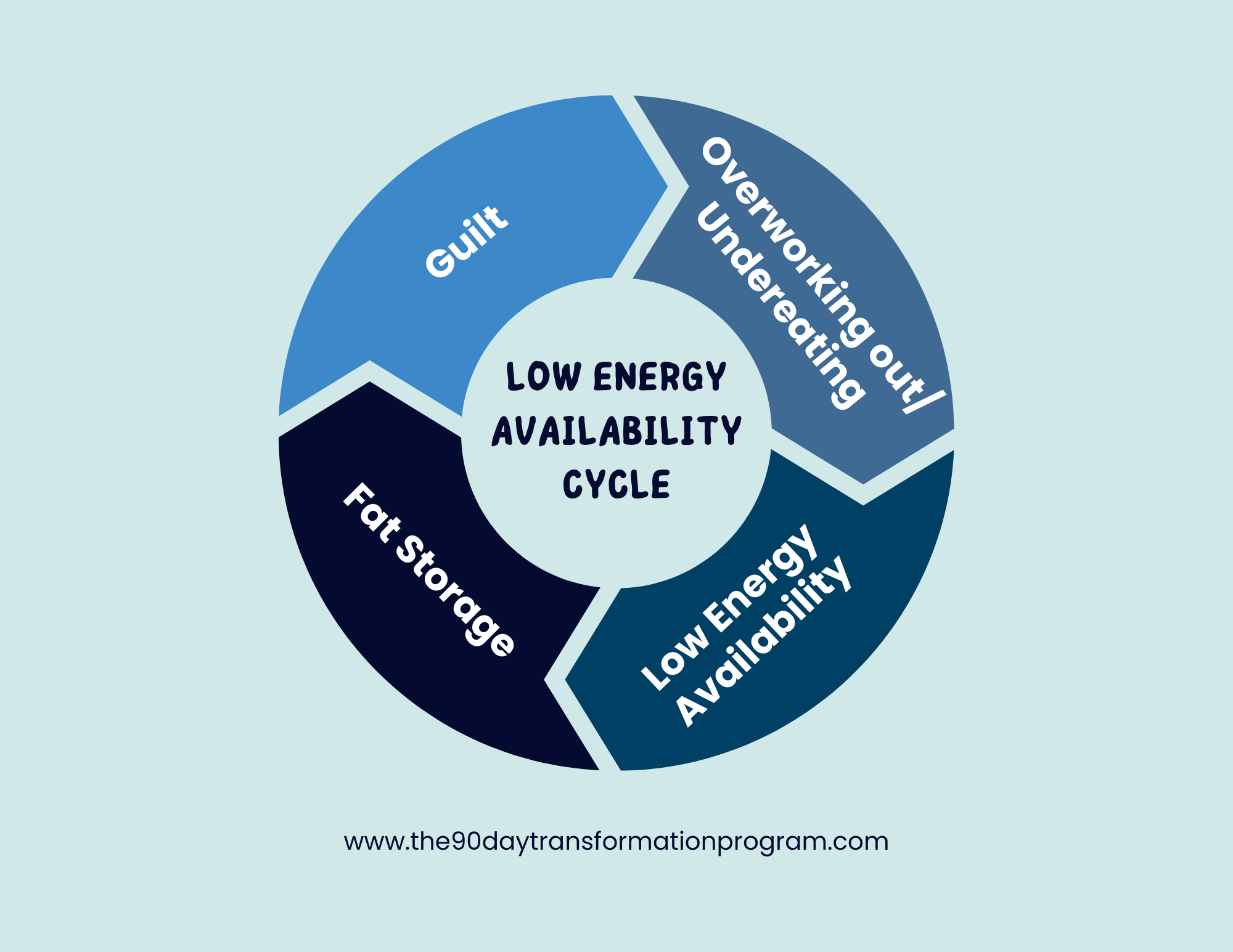
Usually leading to a pattern of irregular intake (aka. usually over-eating late at night) and increased reliance on willpower rather than physiological signaling. As a result, women blame themselves for ‘not being able to control themselves’ or ‘not doing enough’. Often resulting in them falling into this low-energy availability cycle of excessive restriction, overeating and guilt.
Physiological Consequences of Chronic Under-Eating
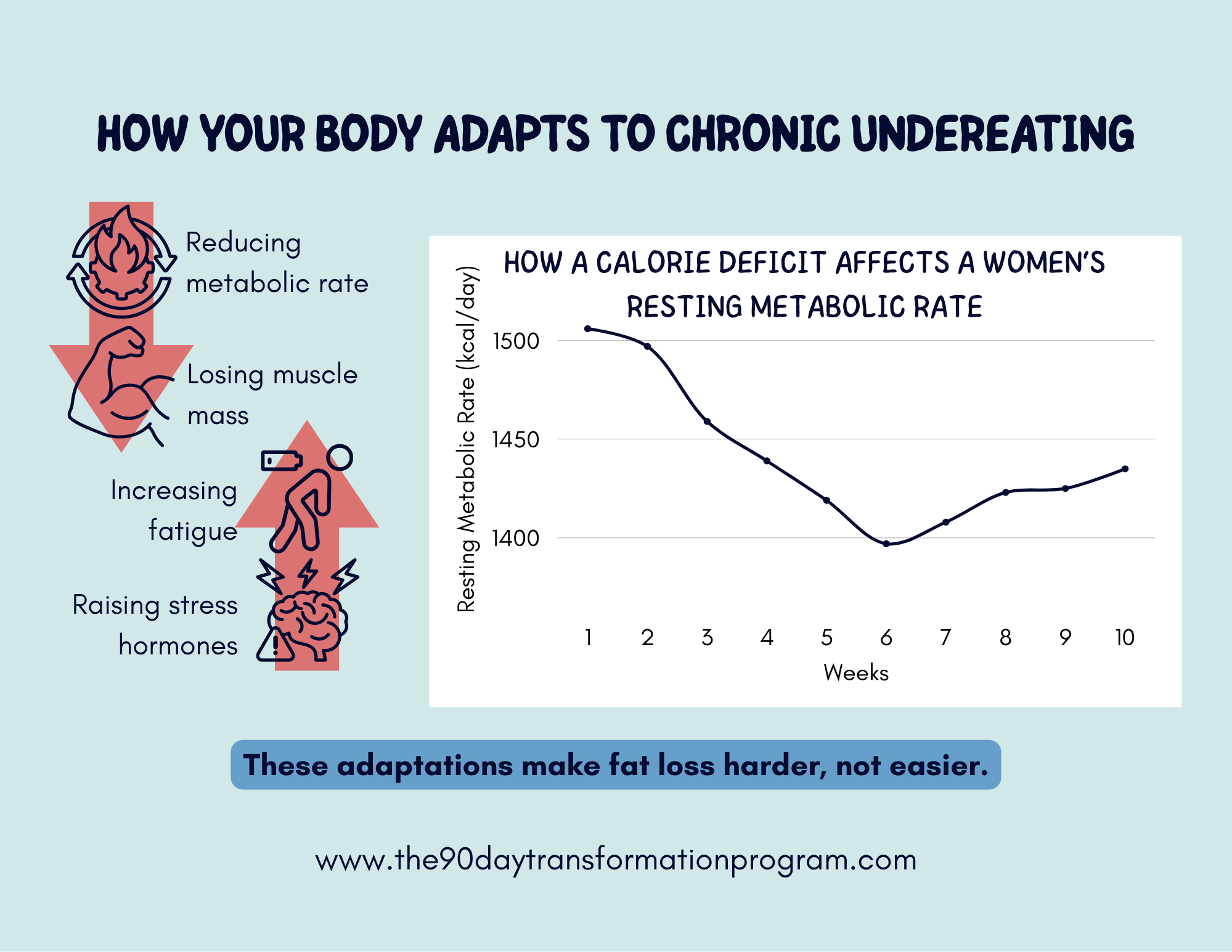
When energy availability remains low, the body adapts.
These adaptations include:
Reduced resting metabolic rate.
Suppressed reproductive hormone signaling.
Increased stress hormone activity.
Impaired training adaptation.
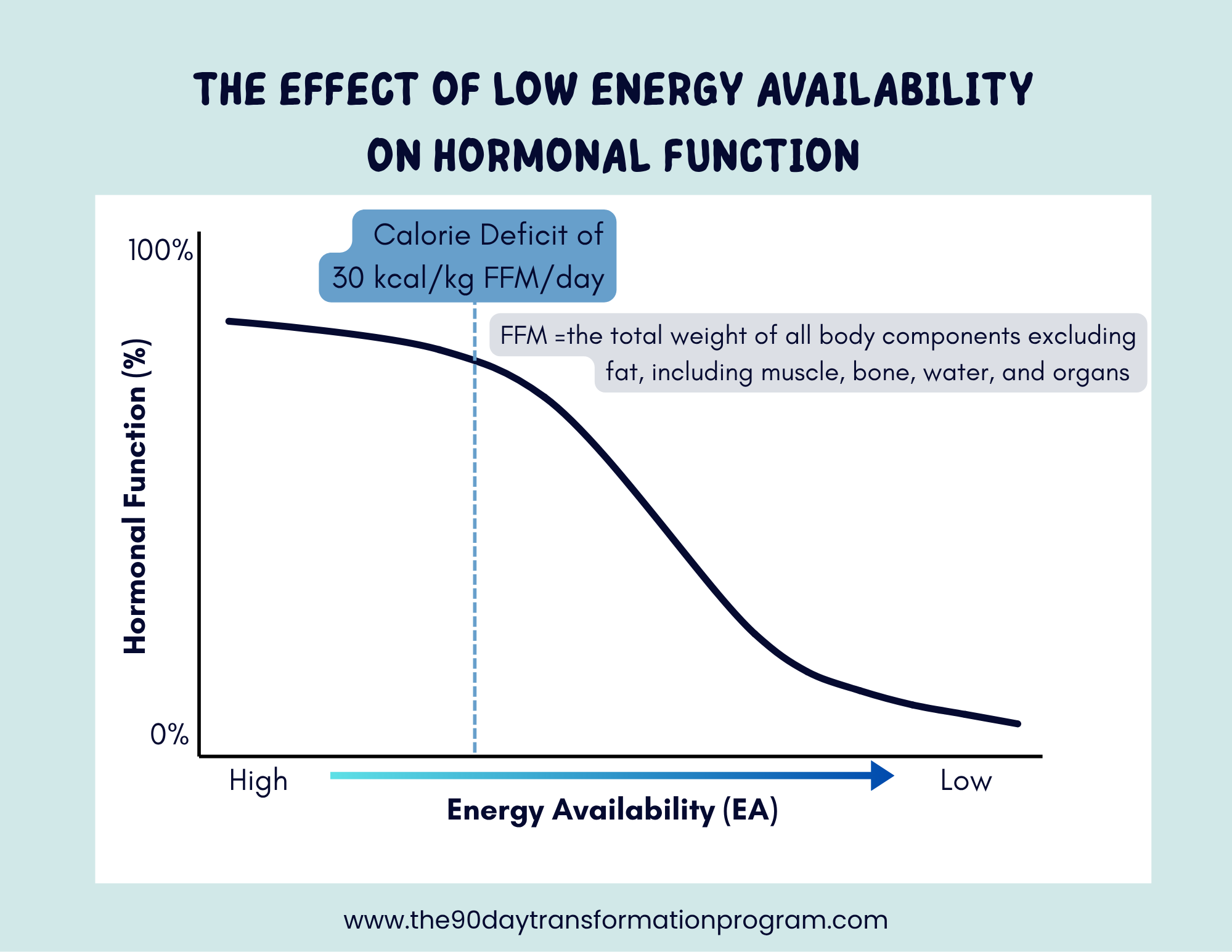
Research shows that hormonal function in women can be disrupted in as little as five days when energy availability falls below approximately 30 kcal per kilogram of fat-free mass.
These responses are protective — they are the body’s attempt to conserve energy — but they also make fat loss, recovery, and performance more difficult to achieve.
Training Is Often Affected Before Bodyweight Changes
One of the earliest signs of under-fueling is reduced training tolerance.
When energy intake is below demand muscle protein synthesis is blunted, the stress responses during training are increased, fatigue compounds and mechanical stimulus is reduced.
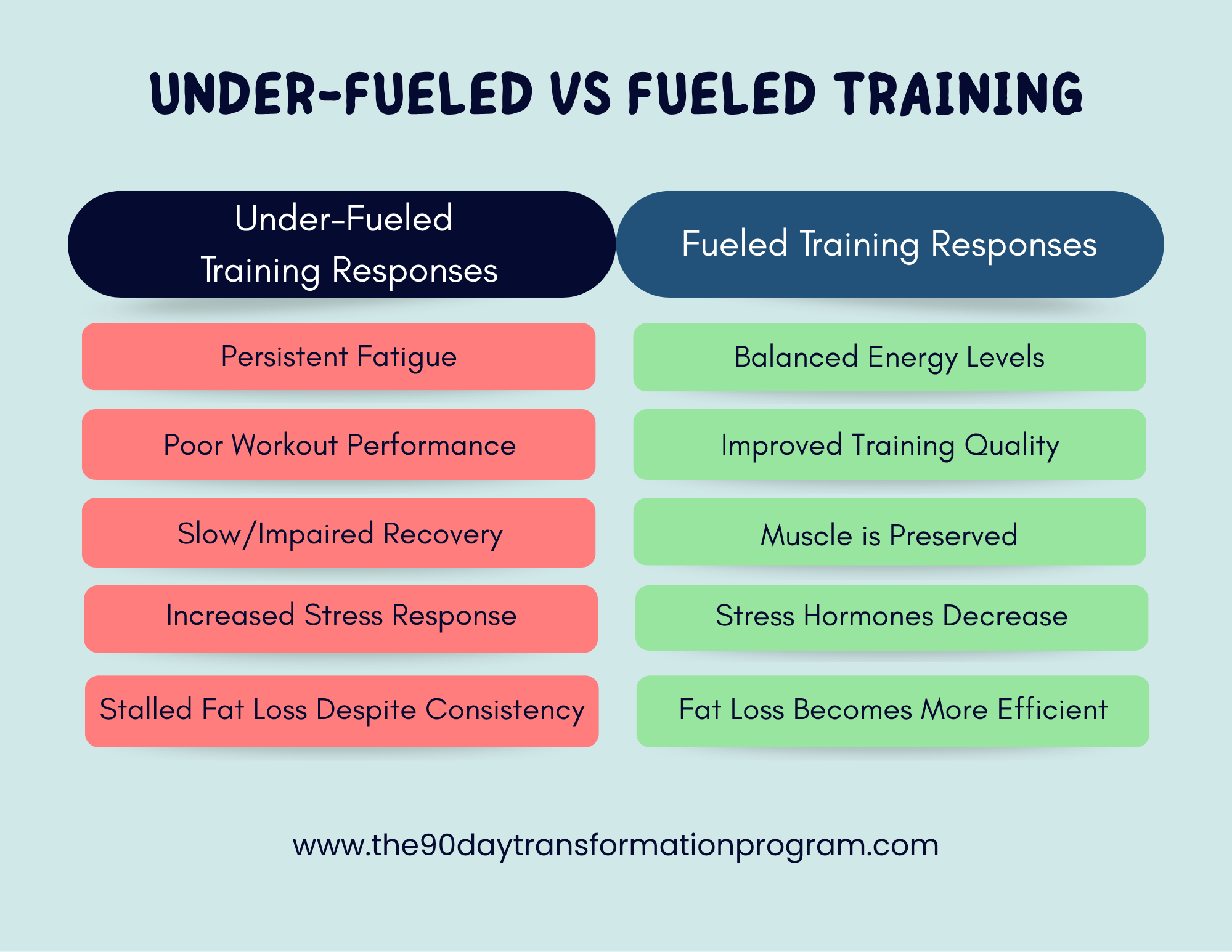
Common indicators of insufficient intake relative to demand include:
Persistent soreness.
Declining strength or performance.
Poor recovery between sessions.
Increased fatigue during workouts.
These changes often occur before noticeable changes in body weight, making them easy to overlook.
Why This Becomes More Relevant After 30
Women over 30 may be particularly vulnerable to unintentional under-eating due to changes in appetite perception, busy schedules, and cumulative stress exposure.

As we age our:
Recovery capacity becomes more limited
Hormonal variability increases.
Tolerance for prolonged energy deficits decreases.
Strategies that once felt manageable may begin to produce fatigue, stalled progress, and reduced training effectiveness.
Common Mistakes and What to Prioritize
Common mistakes I see from women 30+ include:
Assuming fatigue is a motivation issue rather than a fueling issue.
Increasing training volume without increasing intake.
Reducing calories further when progress stalls.
Ignoring recovery and performance signals.
Improving energy availability does not require excessive intake or loss of dietary structure. It involves prioritizing:
Regular meals.
Adequate fueling around training.
Inclusion of energy-dense foods when activity levels are high.
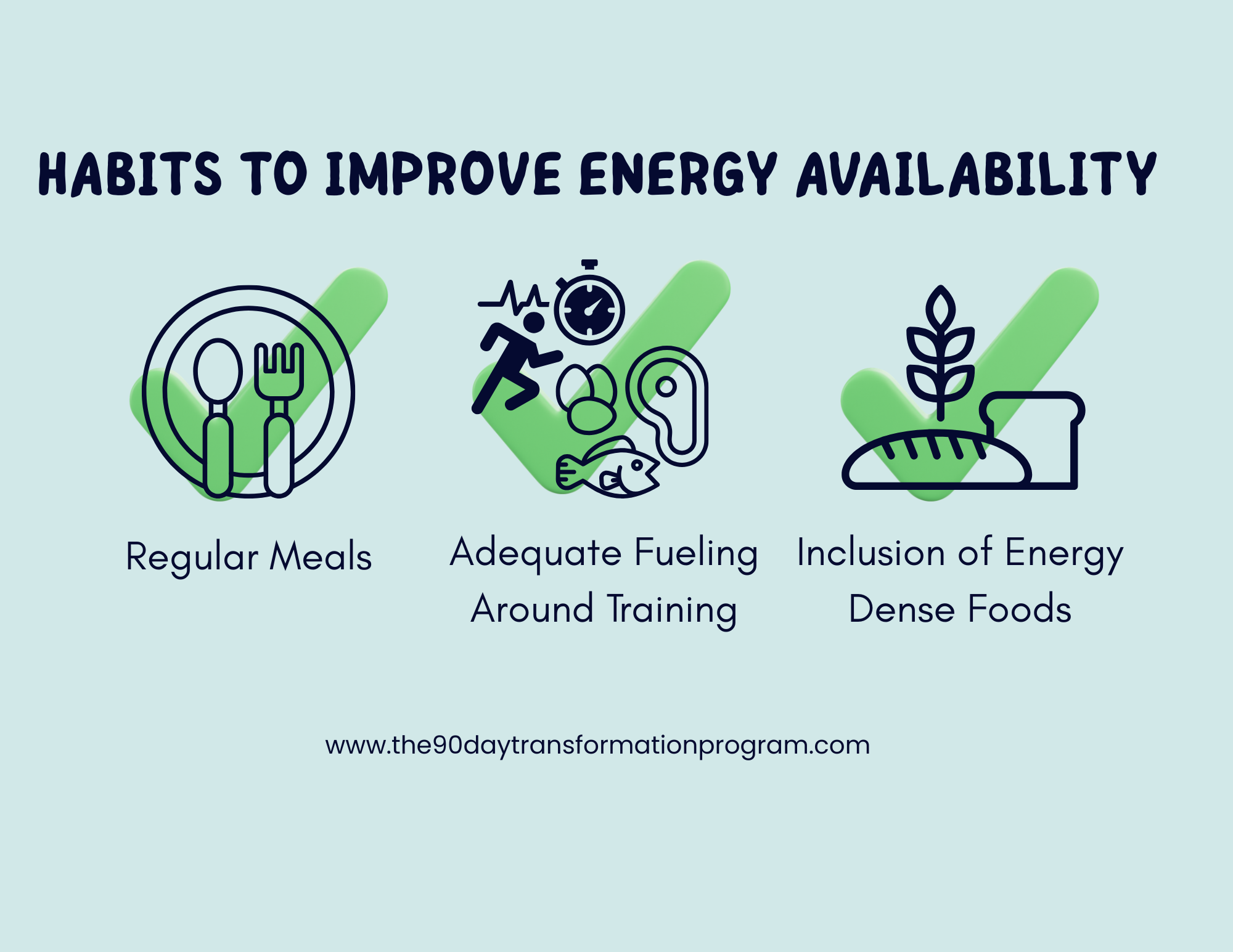
This approach supports metabolic function, hormonal regulation, and training adaptation simultaneously. It leads to better results and a healthy mindset around food.
In Summary
Under-eating is rarely intentional.
For women, particularly those training regularly, progress depends on aligning energy intake with training demands and overall stress load.
Adequate fueling supports:
Metabolic function
Hormonal regulation
Training adaptation
When intake meets demand, the body is better able to recover, perform, and produce sustainable results.
References
Areta, J. L., Burke, L. M., Ross, M. L. R., Camera, D. M., West, D. W. D., Broad, E. M., … Coffey, V. G. (2014). Timing and distribution of protein ingestion during prolonged recovery from resistance exercise alters myofibrillar protein synthesis. Journal of Physiology, 591(9), 2319–2331.
De Souza, M. J., Koltun, K. J., Williams, N. I., & Joy, E. A. (2019). The role of energy availability in reproductive function in women exercising for weight control. Sports Medicine, 49(S2), 87–96.
Loucks, A. B., & Thuma, J. R. (2003). Luteinizing hormone pulsatility is disrupted at a threshold of energy availability in regularly menstruating women. Journal of Clinical Endocrinology & Metabolism, 88(1), 297–311.
Loucks, A. B., Kiens, B., & Wright, H. H. (2011). Energy availability in athletes. Journal of Sports Sciences, 29(S1), S7–S15.
Mountjoy, M., Sundgot-Borgen, J., Burke, L., Carter, S., Constantini, N., Lebrun, C., … Ljungqvist, A. (2018). IOC consensus statement on relative energy deficiency in sport (RED-S): 2018 update. British Journal of Sports Medicine, 52(11), 687–697.
Nattiv, A., Loucks, A. B., Manore, M. M., Sanborn, C. F., Sundgot-Borgen, J., & Warren, M. P. (2007). The female athlete triad. Medicine & Science in Sports & Exercise, 39(10), 1867–1882.
Thomas, D. T., Erdman, K. A., & Burke, L. M. (2016). Position of the Academy of Nutrition and Dietetics, Dietitians of Canada, and the American College of Sports Medicine: Nutrition and athletic performance. Journal of the Academy of Nutrition and Dietetics, 116(3), 501–528.