
Sleep, Stress, and Female Metabolism
For many women over 30, fat loss becomes harder not because training or nutrition are wrong — but because recovery is insufficient.
Sleep and stress regulation are two of the most powerful, and most overlooked, drivers of metabolic health in women.
Sleep Is a Metabolic Regulator — Not a Luxury
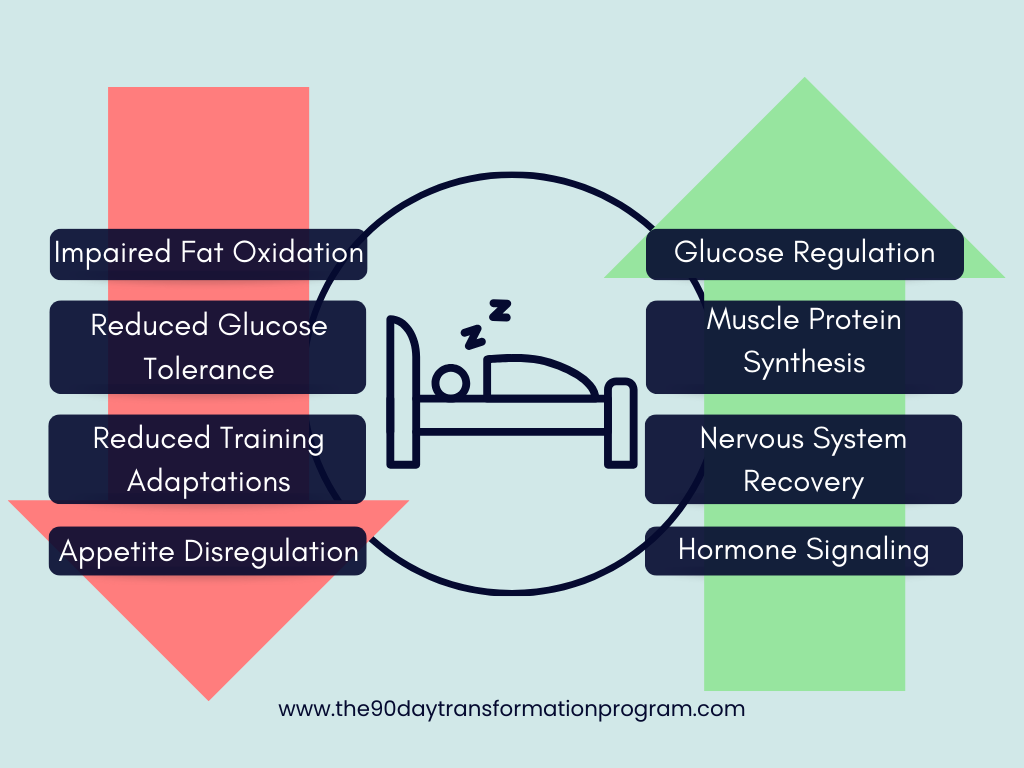
From a physiological standpoint, sleep is a critical period for metabolic regulation. During adequate sleep, the body supports;
Glucose Regulation - keeps blood sugar levels stable.
Muscle Protein Synthesis - builds muscle
Nervous System Recovery - returning the body from a state of high stress, anxiety, or burnout to a state of calm, safety, and rest.
Hormone Signaling - the communication from your brain to your body to release certain hormones at certain times.
When sleep duration or quality is compromised, these processes become less efficient, creating downstream effects that directly impact fat loss and energy balance, such as;
Reduced Glucose Tolerance - Fluctuating blood sugar levels leading to energy peaks and crashes.
Impaired Fat Oxidation - a reduced ability for the body to break down fat for energy.
Increased Hunger and Appetite Dysregulation - hunger and satiety hormones not released at the right time or the right levels.
Reduced Training Adaptation - Reduced effectiveness of workouts.
Even small, consistent sleep deficits can have measurable metabolic effects.
Sleep and Insulin Sensitivity
Research consistently shows that insufficient sleep is associated with reduced insulin sensitivity in both men and women. When insulin sensitivity declines, the body becomes less effective at clearing glucose from the bloodstream, increasing the likelihood that excess energy will be stored as fat.
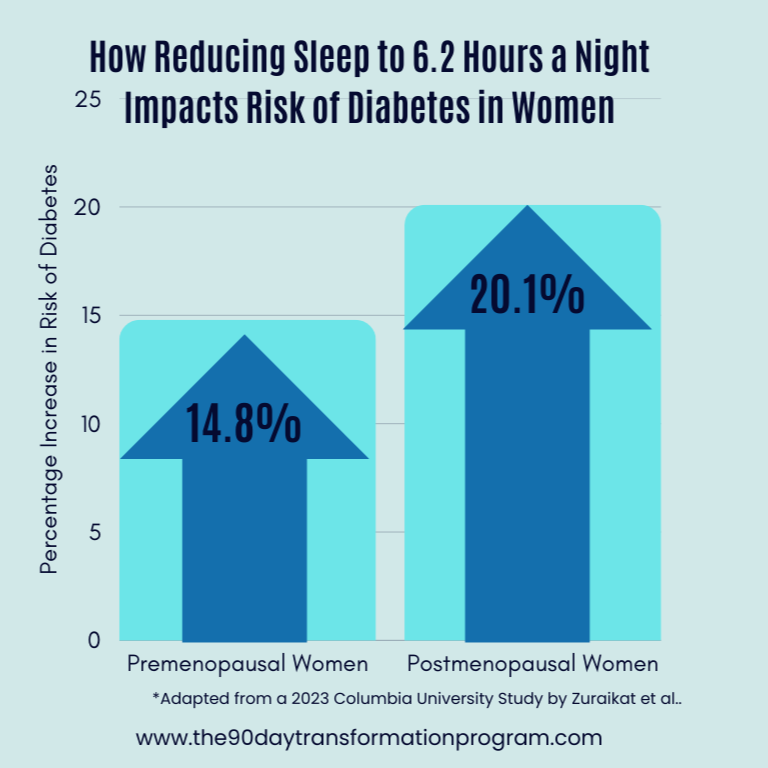
A 2023 study on 38 women found that cutting sleep to 6.2 hours per night for six weeks increased insulin resistance by 14.8% in women.
Postmenopausal women were more severely affected, showing up to a 20.1% increase in insulin resistance, highlighting, and that even moderate sleep deficits significantly raise type 2 diabetes risk.
This effect appears to be more pronounced in women in comparison to their male counterparts, particularly when sleep disruption is paired with caloric restriction or high training demands, creating an increase in total physiological stress.
Remember, your body cannot distinguish between different stressors and sleep is one of them.
Sleep Loss Alters Appetite Hormones
Research shows that inadequate sleep:
Increases hunger signaling (cravings)
Reduces satiety signaling (feeling full)
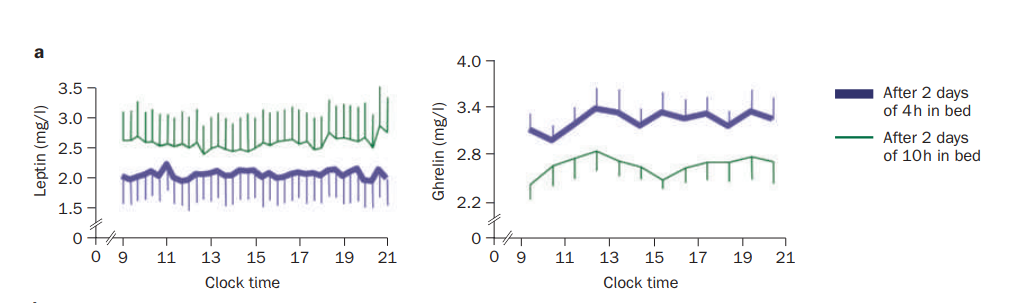
The results from a 2004 study in the Journal of Clinical Endocrinology & Metabolism shows that leptin levels (satiety hormone) decreased and ghrelin (hunger hormone) increased after just two days of reduced sleep.
These two signals being off results in greater perceived appetite and reduced dietary restraint, which many women would blame themselves and their ‘lack of willpower’ for, which is simply not the case. Over time, this hormonal shift can make consistent energy intake regulation increasingly difficult. They are driven by physiology rather than willpower.
This helps explain why fat loss often stalls during periods of poor sleep, despite consistency with diet and training.
Stress and Sleep Act on the Same Pathways
Psychological stress, training stress, and sleep deprivation all activate similar physiological responses.
Remember, your body cannot distinguish between different stressors!
When you combine all these individual stressors together:
Cortisol remains elevated
Recovery capacity declines
Energy conservation increases
This happens because this environment favors survival — not fat loss.
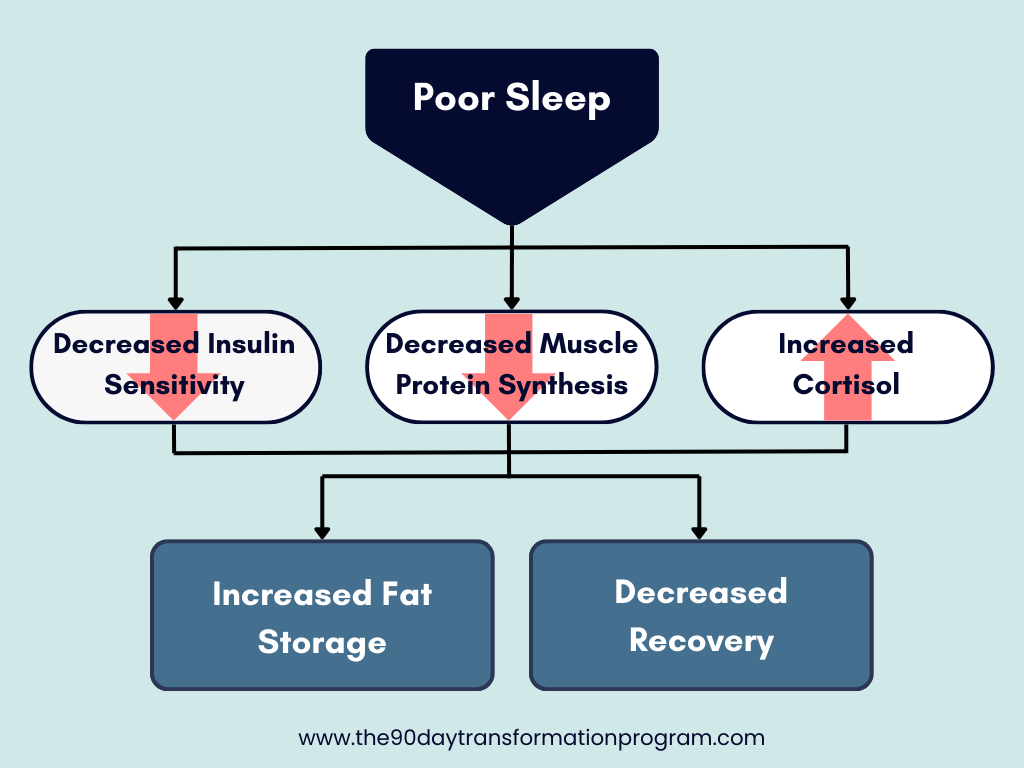
Cortisol and Female Fat Distribution
Central to this response is cortisol, a hormone that plays an essential role in mobilizing energy during acute stress but becomes problematic when chronically elevated.
Chronically elevated cortisol levels are associated with:
Reduced Muscle Protein Synthesis
Impaired Insulin Sensitivity
Increased Central Fat Storage
Women appear particularly sensitive to cumulative stress exposure due to interactions between cortisol and reproductive hormones.
Why “Pushing Harder” Often Makes Things Worse
When sleep is poor and stress is high, fat storage typically increase. Most women’s common responses to seeing an increase in fat storage on their body often:
Add More Workouts
Increase Cardio
Eat Less Food
These strategies often amplify stress rather than resolve it.
More effort does not improve outcomes when recovery is the limiting factor. The issue is not a lack of effort, but instead it’s a mismatch between your body’s physiological load and it’s recovery resources.
Remember! Doing more is not always better.
For women over 30, when it comes to exercise, quality over quantity is key.
What You Should Do To Support Fat Loss and Your Metabolism
Metabolic resilience has been shown to improve when women prioritize:

Sleep quality and consistency often have a greater impact on fat loss than additional exercise. Even just modest improvements in sleep duration and consistency have been shown to positively influence insulin sensitivity, appetite regulation, and perceived energy levels.
In Summary
Sleep and stress are not “soft” variables.
They directly influence your metabolic efficiency, your body’s hormonal regulation, and your training adaptations (i.e. the effectiveness of your workouts).
For women over 30, supporting recovery is not optional — it is foundational.