
Understanding Energy Availability in Women

Energy availability is one of the most important concepts in women’s health — and one of the least understood.
What Energy Availability Actually Means
Energy availability refers to the amount of energy remaining for normal physiological function after the energy cost of exercise has been accounted for.
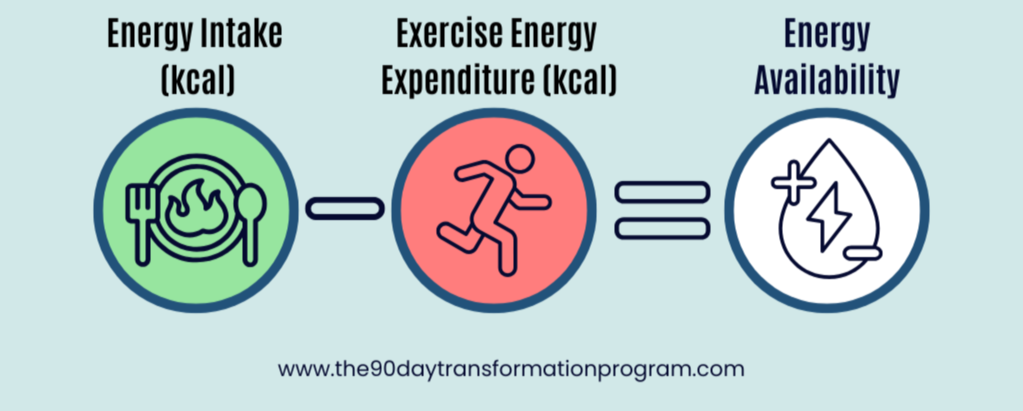
In other words, whether the body has enough fuel to support essential processes such as
Hormonal Regulation
Metabolic Function
Bone Health
Immune Response
Recovery
It is not the same as calorie intake alone.
It explains why many women train consistently, eat “well,” and still feel exhausted, stalled, or stuck.
Women Are More Sensitive to Low Energy Availability
Women appear to be particularly sensitive to sustained energy scarcity due to our reproductive hormones.
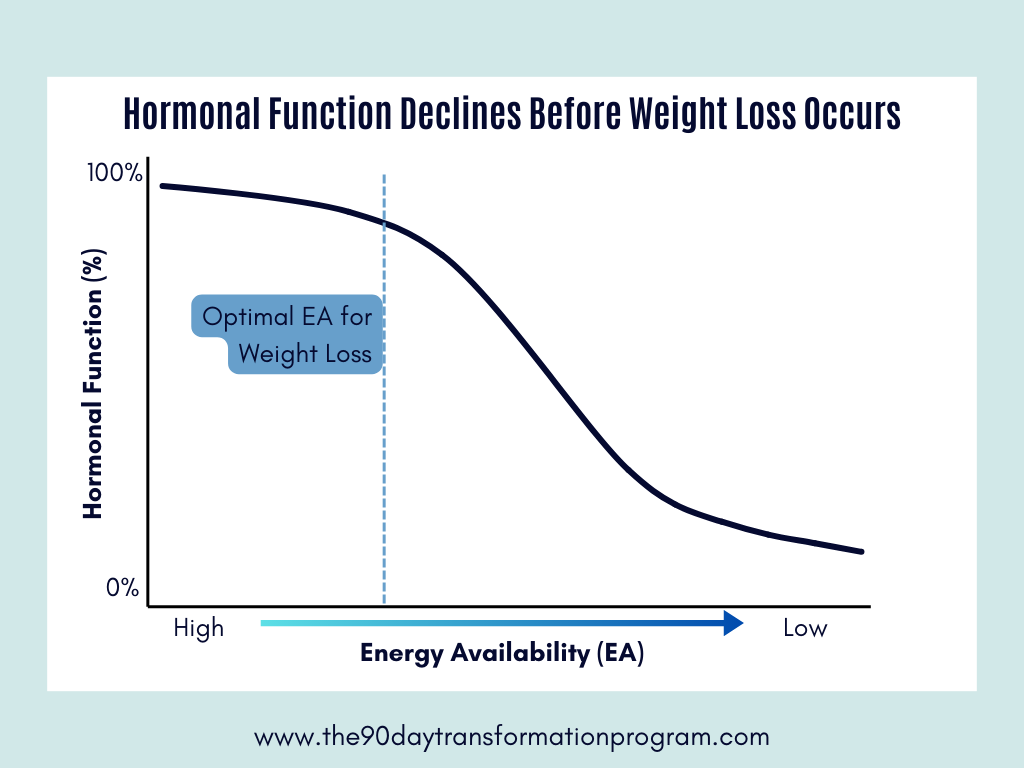
Research shows that even moderate, unintentional deficits — often created by a combination of exercise and under-eating — can disrupt endocrine function without obvious external signs.
When energy availability is low, the body reduces energy expenditure in several ways:
Reducing resting metabolic rate
Suppressing reproductive hormone signaling
Increasing stress hormone output
Limiting training adaptation
These responses are protective — designed to conserve energy when resources are perceived as scarce.
Hormonal Systems Are Affected Early
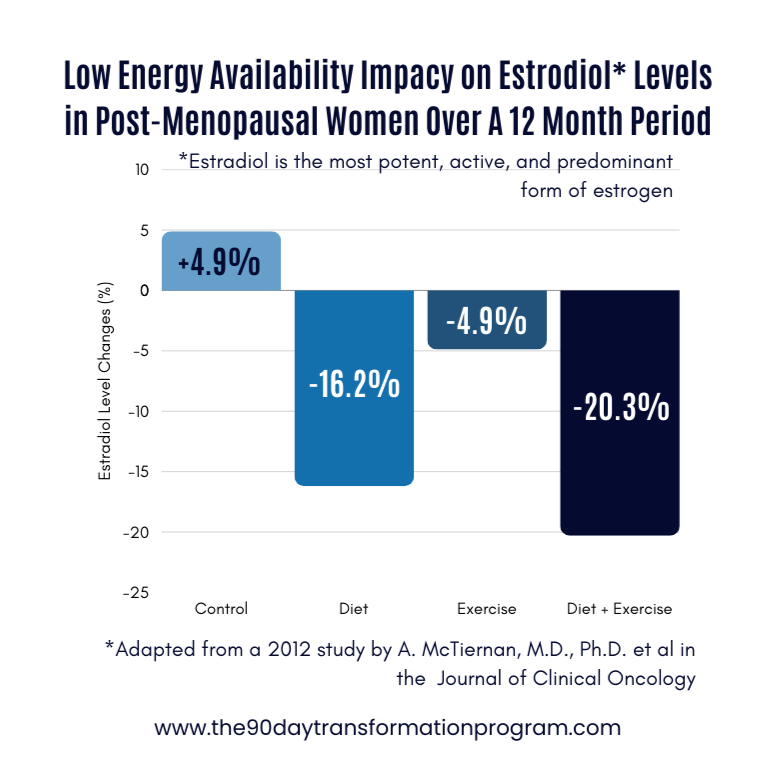
One of the earliest systems affected is reproductive hormone regulation. Low energy availability can impair:
Estrogen signaling
Thyroid hormone activity
Bone remodeling processes
Low estrogen levels has implications beyond menstrual function; influencing bone density, connective tissue integrity, insulin sensitivity, and lipid metabolism. (It should be noted that this study saw a decrease in bone density across all groups).
The effects of low energy availability can occur even when body weight appears normal (or even increasing!).
Training Suffers When Energy Is Insufficient
Low energy availability also alters how the body responds to training.
Muscle protein synthesis is reduced
Recovery slows
Fatigue increases
Injury risk rises
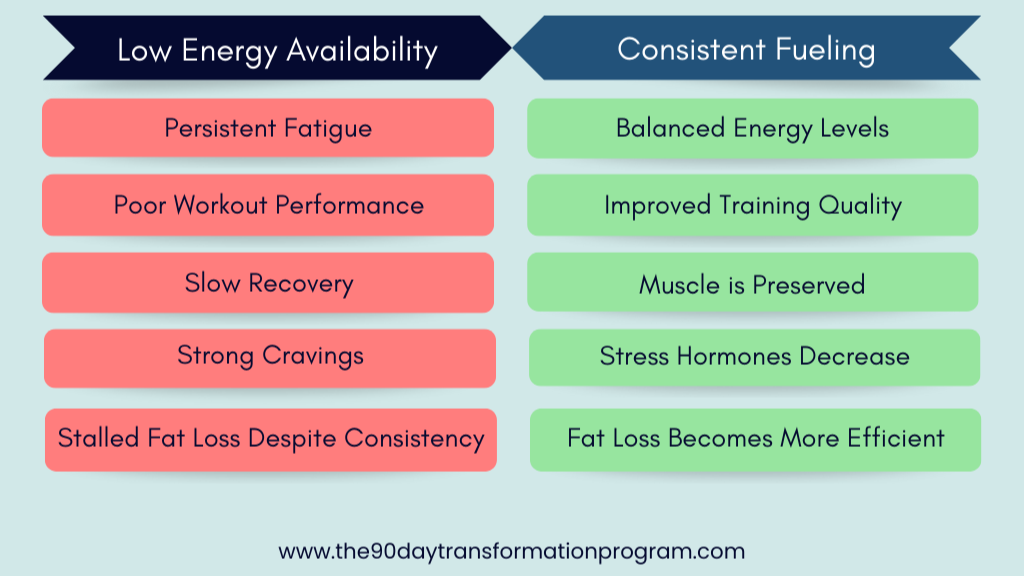
The body prioritizes survival over adaptation. Limiting progress and increasing the likelihood of overuse injuries.
Energy Availability Includes More Than Food
Recovery demands increase with other factors such as:
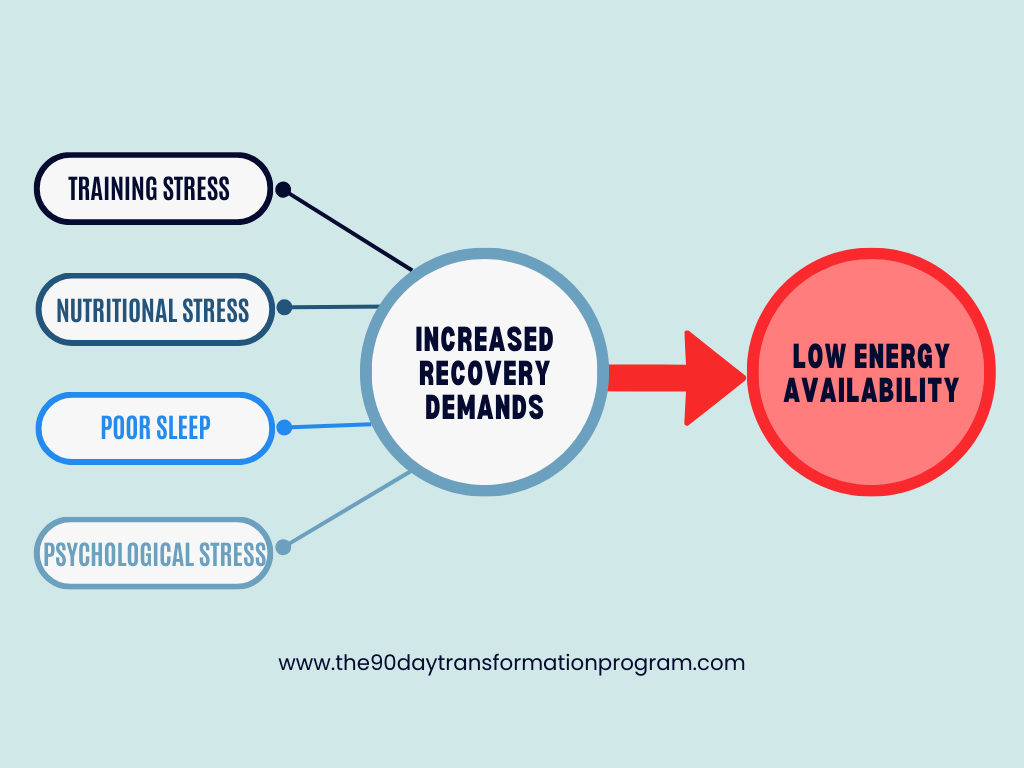
Training Stress
Nutritional Stress
Poor Sleep
Psychological Stress
These factors effectively increase your body’s energy demand resulting in intake that once felt sufficient, no longer being adequate.
Low Energy Availability Does Not Require Extreme Dieting
These effects are not limited to athletes who train regularly. In non-athletic populations, low energy availability is common and often develops unintentionally through habitual under-eating combined with regular exercise.
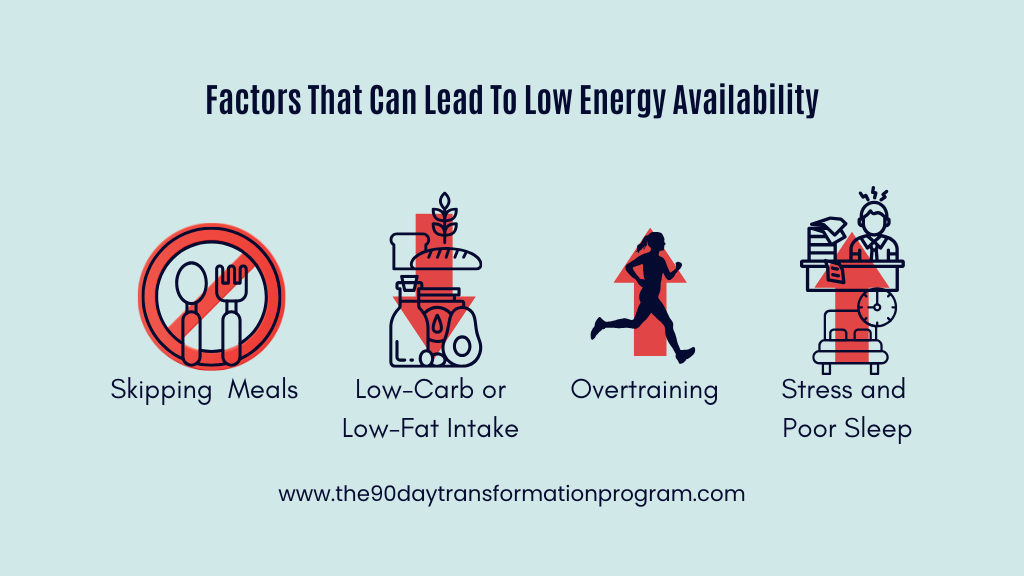
Many women under-fuel unintentionally while believing they are eating adequately.
Restoring Energy Availability
Supporting energy availability involves:
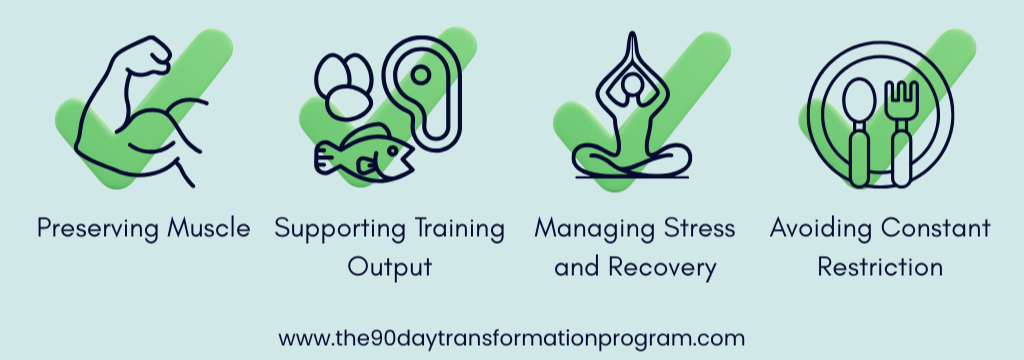
When energy availability is restored and maintained, hormonal regulation improves, training adaptations become more consistent, and fat loss becomes a byproduct of improved metabolic function rather than a constant struggle.
In Summary
Energy availability is the foundation of your hormonal health, metabolic function, and training adaptation.
Understanding energy availability provides a unifying framework for many issues women encounter in health and fitness.
For women, progress does not come from doing more — it comes from aligning inputs with physiological needs.
This foundation sets the stage for more effective training and nutrition strategies for women over 30. When energy availability is supported, the body becomes responsive again.