
Why Chronic Dieting Backfires in Women after 30
Dieting is often framed as the solution for fat loss. But for many women, it becomes the problem.
While short-term weight reduction is often achieved, long-term outcomes frequently include stalled progress, fatigue, hormonal disruption, and repeated cycles of regaining weight. More commonly known as yo-yo dieting.
It is important to know that these patterns are not a failure of discipline!
Chronic dieting produces predictable physiological adaptations — especially in women.
Here are some reasons why dieting might not be working for you anymore;
The Body Adapts to Energy Restriction
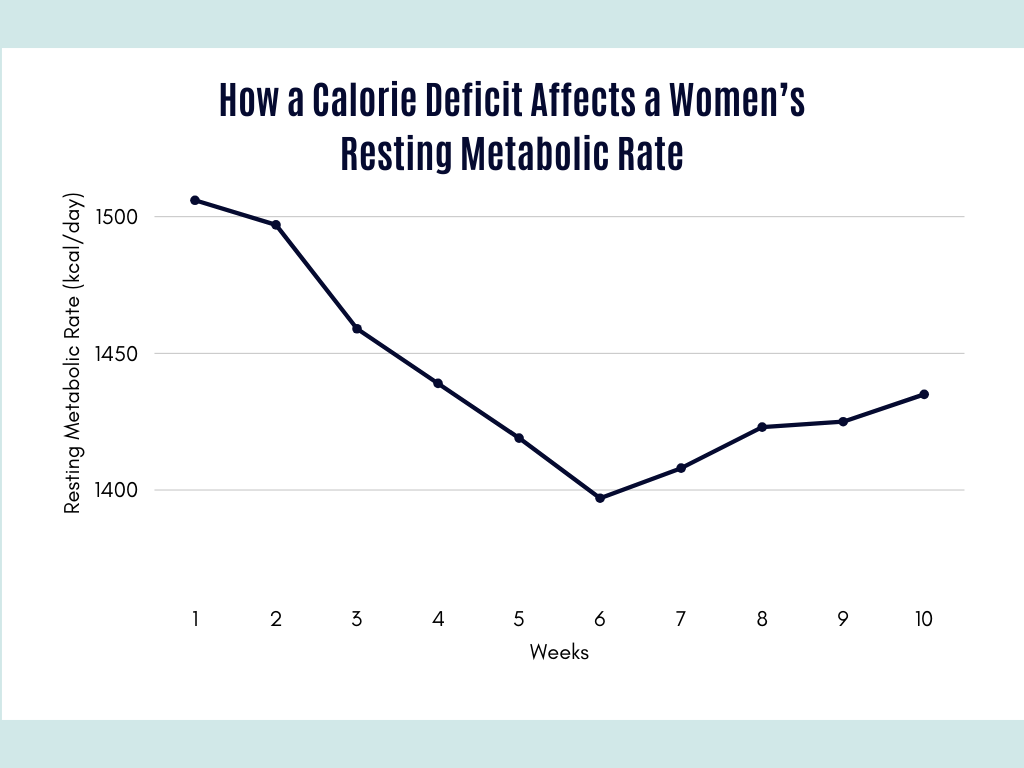
This graph shows the results of a study completed on seventy-four overweight female subjects and shows the effect calorie restriction had on the resting metabolic rate over the course of a 10 week period.
Graph adapted from Davoodi et al. (2014)
When calorie intake remains too low for extended periods, the body responds by:
Reducing resting metabolic rate
Increasing efficiency of energy use
Breaking down lean tissue (e.g. muscle)
Suppressing non-essential functions (e.g. menstrual cycle)
These adaptations are designed to preserve survival — not aesthetics.
Your body doesn’t care that your belly fat makes you self-conscious when it’s trying to survive and function on a harsh calorie deficit with low energy availability!
2. Muscle Loss Is a Major Consequence of Dieting
Weight loss without resistance training commonly results in:
Loss of lean muscle mass
Reduced metabolic rate
Lower insulin sensitivity
A softer body composition
Muscle loss makes future fat loss harder, not easier.
3. Dieting Increases Stress Hormone Output
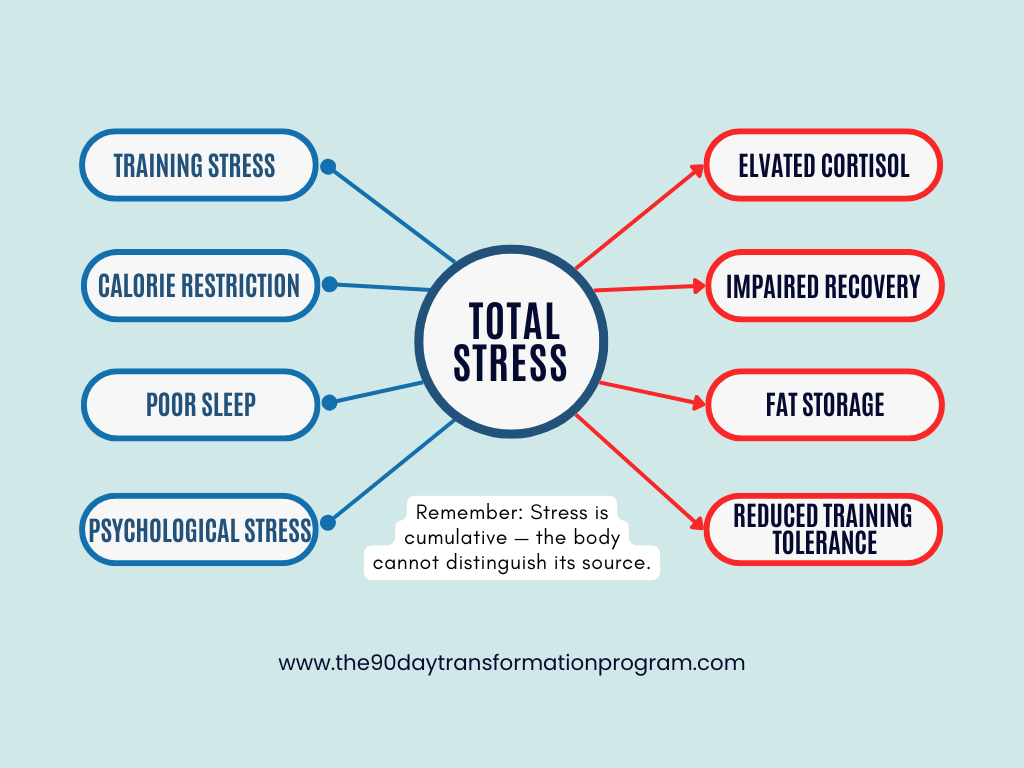
Calorie restriction is a physiological stressor.
The combination of a calorie restricted diet, excess training, lack of sleep and life stress can:
Elevate cortisol
Impair recovery
Increase abdominal fat storage
Reduce training tolerance
This helps explain why many women feel:
More tired
Colder
Less resilient
Stuck despite “doing everything right”
4. Dieting Becomes Less Tolerated With Age
Throughout the years leading into perimenopause, this is typically occurs for most women in their late 30’s into their 40’s, your;
Recovery capacity decreases
Hormonal variability increases
Tolerance for prolonged restriction declines
Aggressive dieting during this stage often worsens:
Fat distribution
Energy levels
Sleep quality
Training adaptation
What Works Better Than Dieting
Now that we’ve gone through all the ways chronic dieting could be behind your fat loss struggles, here are some things you should do instead of severe calorie restriction.
Physiology-driven fat loss strategies for women over 30 prioritize:
Muscle preservation
Adequate protein intake
Strength training
Stress management
Sufficient energy availability
Fat loss becomes a byproduct of improved metabolic function — not the focus.
In Summary
Chronic dieting does not fail because women lack willpower.
It fails because the body adapts.
Sustainable fat loss requires strategies that support metabolism, preserve muscle, and reduce physiological stress — not ones that escalate it.