
How to Strength Training If You’re a Women Over 30
For many women, strength training is intimidating and confusing.
But after 30, it is not optional - it’s crucial.
And it isn’t about lifting heavier for the sake of it.
It’s about protecting the systems that determine your long-term health such as: metabolism, bone density, hormones, and physical independence.
In this article, we move beyond the why — and talk about how.
The Why: A quick Recap
For more depth on the why, read this article: Why Building Muscle is a Non-Negotiable for Women After 30
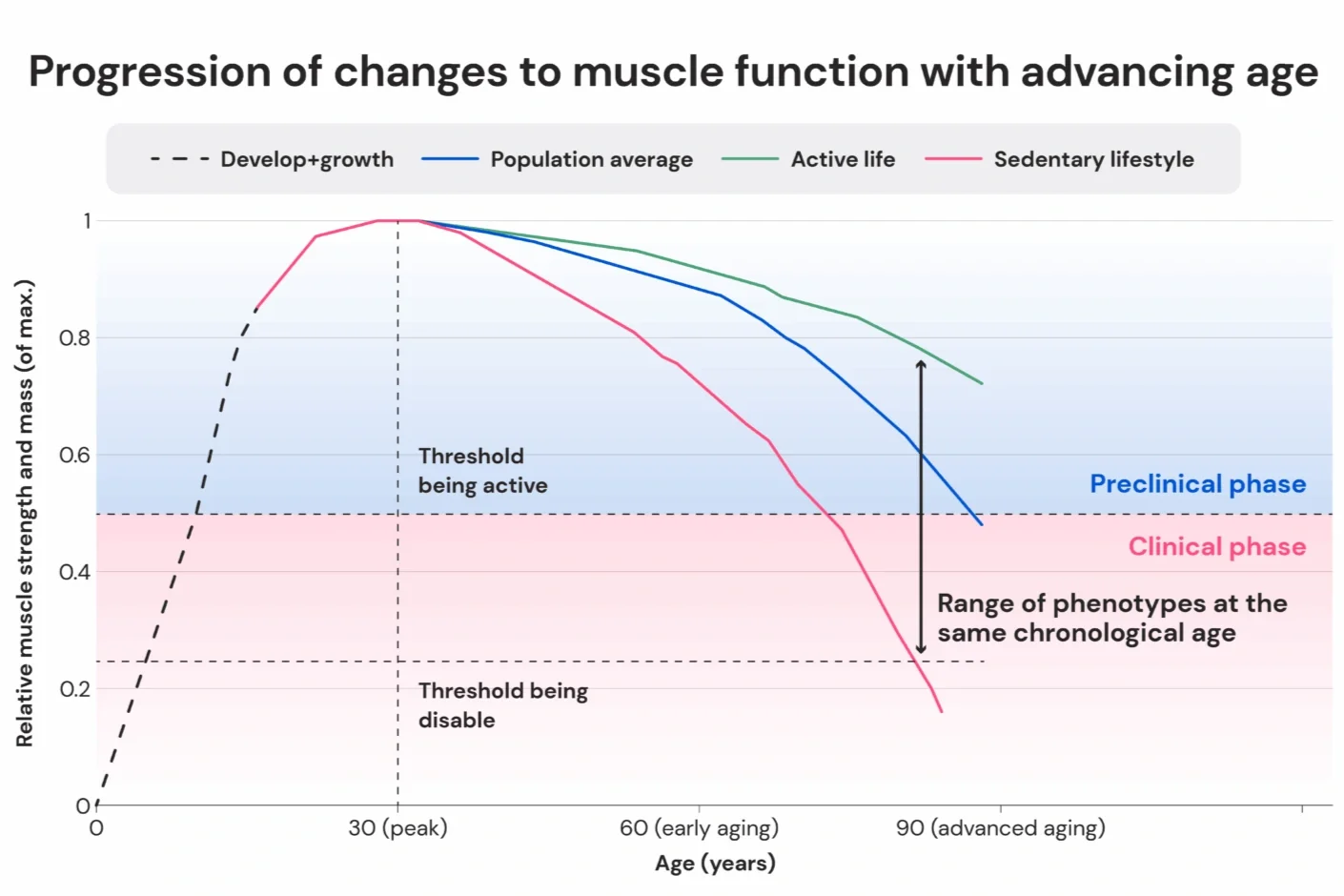
From around age 30, muscle mass declines progressively as we age.
This decline is accelerated by:
Sedentary lifestyles
Chronic dieting
Excessive cardio without strength work
Low protein intake
Loss of muscle mass is associated with:
Reduced metabolic rate
Increased fat storage
Greater blood sugar instability
Preserving muscle protects against age-related metabolic decline, insulin sensitivity, and support stable energy levels and fat loss — and the only way to preserve it is to provide a sufficient mechanical stimulus. Without load, the body has no reason to retain muscle.
That means resistance training that is heavy enough and structured properly.
Strength Training Supports Bone and Joint Health
Bone, just like muscle, adapts to stress. It also, just like muscle, naturally declines as we age.
Resistance training:
Stimulates osteoblast activity (bone-building cells)
Slows age-related bone loss
Improves skeletal strength and density
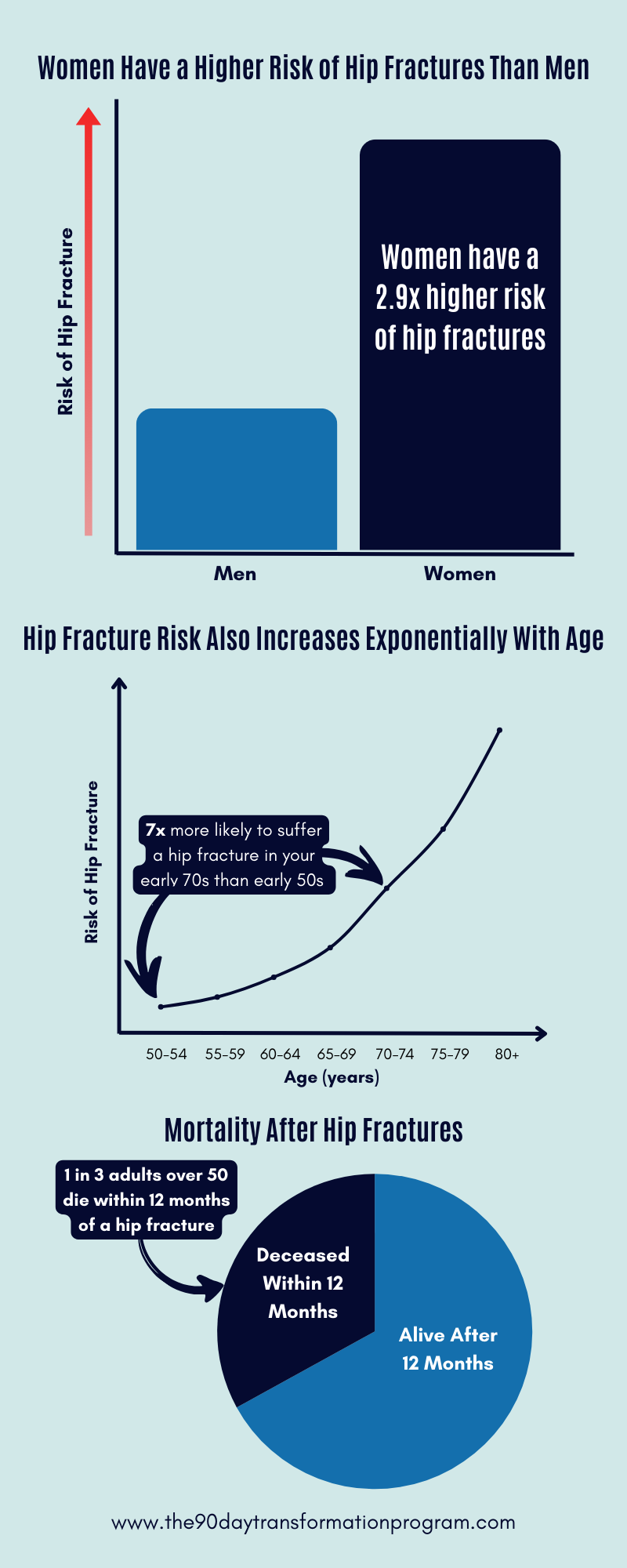
This becomes increasingly important for women approaching perimenopause, when estrogen fluctuations begin affecting bone strength meaning fractures become increasingly likely. E.g. Hip fractures - about 300,000 Americans over 65 fall and break their hips annually.
Strength training also improves connective tissue strength and joint stability. Joint structures adapt to progressive loading, leading to:
Improved joint alignment
Reduced excessive joint stress
Increased connective tissue resilience
This means fewer overuse injuries, less chronic pain, and greater durability long term.
Whether you strength train is quite simply one of the biggest factors determining your quality of life as you get older.
The Underrated Benefit of Strength Training
Strength gains enhance movement efficiency and strength without requiring large increases in muscle size. Strength gains initially occur through:
Neuromuscular adaptation
Improved motor unit recruitment
Better coordination
These neural adaptations occur relatively quickly and contribute to early strength gains, making resistance training accessible and beneficial even for women new to structured exercise.
Better coordination, stability and proprioception leads to a reduced risk of falling, reduced risk of fractures and therefore reduced mortality.
The How: how to Strength Train for Women Over 30
So how should you strength train? What does that look like?
Based on principles frequently discussed in female-specific training research, women over 30 respond extremely well to:
Heavier loading
Lower to moderate rep ranges
Full recovery between sets
Intentional progression
Women typically tolerate higher relative intensity and recover quickly between sets — but they still require progressive overload.
Ideal Weekly Training Structure
These are some recommended and effective ways to program your strength training for women over 30, whether you’re looking to hit the gym 2, 3 or 4 times per week.
REMEMBER: The best split for you is the one you enjoy the most and you can stick to for the rest of your life!
Option 1: 3 Day Full-Body Split
Best for: Women looking to train 3 days a week consistently and can ideally have 24 hours between sessions.
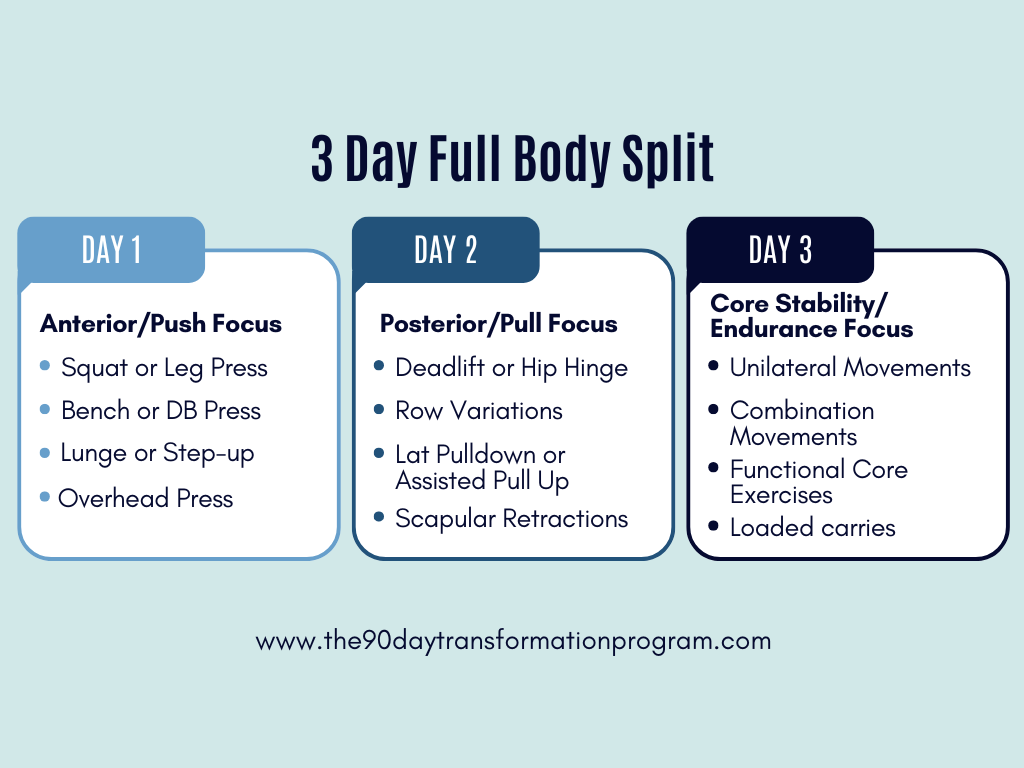
Day 1 – Push Focus
Squat or leg press
Bench press or dumbbell press
Split squat or lunge
Overhead press
Day 2 – Pull/Posterior Chain Focus
Deadlifts
Row variations
Lat pulldown or assisted pull-up
Scapular Retractions
Day 3 – Core Stability and Muscular Endurance Focus
Unilateral Movements
Combination Movements
Functional Core Exercises
Loaded carries
Why it works:
Stimulates all major muscle groups 2–3x per week
Allows adequate recovery
Supports muscle and bone adaptation
This is the split we follow in The 90 Day Transformation Program™. It is the most sustainable and effective starting point for most women over 30 to see results by Day 90.
But it is not the only effective structure.
Option 2: Upper / Lower Split (4 Days Per Week)
Best for: Women who can train 4 days consistently and want slightly more volume per muscle group.
Day 1 – Lower Body (Strength Focus)
Squat variation (4 x 5–6)
Romanian deadlift (3 x 6–8)
Split squat (3 x 8)
Core stability
Day 2 – Upper Body (Push/Pull Strength)
Bench press or DB press (4 x 6)
Row (4 x 6–8)
Overhead press (3 x 8)
Lat pulldown or pull-ups
Day 3 – Lower Body (Posterior Chain + Power)
Deadlift or hip thrust (4 x 5)
Step-ups (3 x 8)
Hamstring curl (3 x 10)
Loaded carries or sled pushes
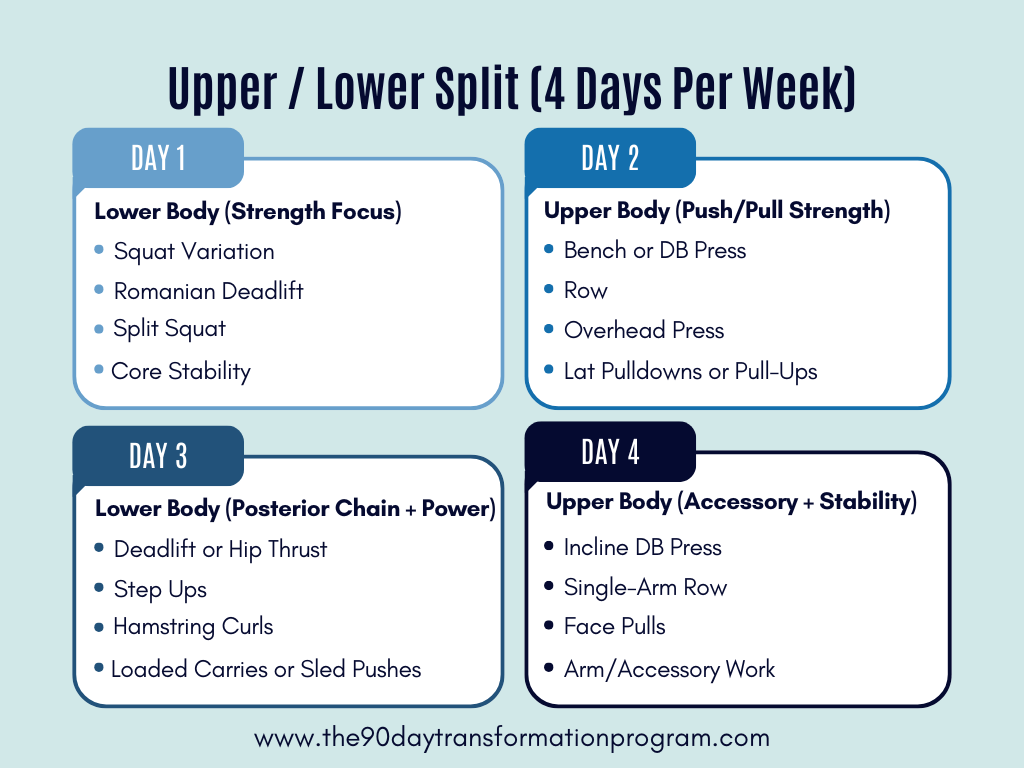
Day 4 – Upper Body (Accessory + Stability)
Incline DB press (3 x 8–10)
Single-arm row (3 x 8–10)
Face pulls (3 x 12)
Arm accessory work
Why It Works:
Hits each muscle group twice weekly
Allows heavier loading without excessive fatigue
Distributes joint stress
Supports muscle + bone density adaptation
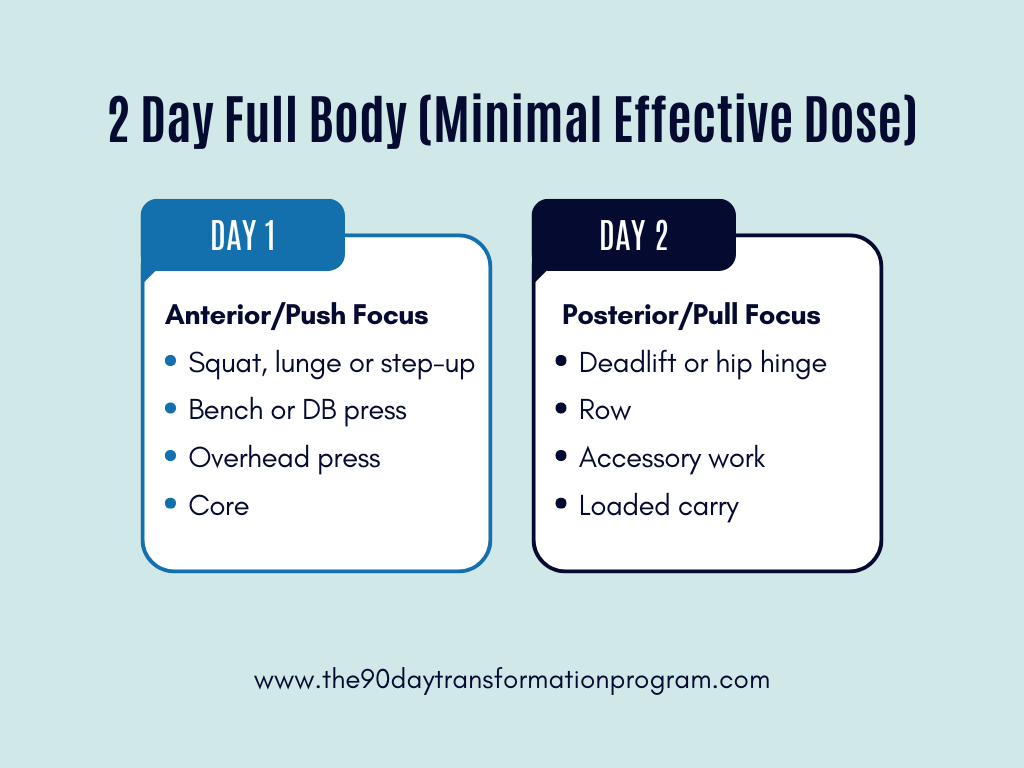
Option 3: 2 Day Full Body (Minimal Effective Dose)
Best for: Busy professionals, Moms, high stress periods, or beginners looking to workout twice a week.
Day 1 - Anterior/Push Focus
Squat, lunge or step-up (3–4 x 6–8)
Bench or DB press (3–4 x 6–8)
Overhead press (3 x 6–8)
Core
Day 2- Posterior/Pull Focus
Deadlift or hip hinge (3–4 x 5–6)
Row (3 x 8)
Accessory work
Loaded carry
Why It Works:
Research shows 2x/week resistance training is sufficient to maintain and build strength when intensity is adequate
Lower systemic fatigue
Easier adherence
Still delivers mechanical stimulus
For many women over 30, consistency > complexity.
How to Choose the Right Split
Instead of asking:
“What’s the best split?”
Ask:
“What split can I see myself doing consistently?”
Always start small and build. If you’re not sure you can commit to 3 or 4 days in the gym, commit to 2 and focus on consistency, you can always add an extra one later on.
If you feel that your recovery is poor or you’re constantly tired → reduce frequency before reducing load.
Load drives adaptation. Excess volume drives fatigue.
Sets, Reps & Intensity Guidelines
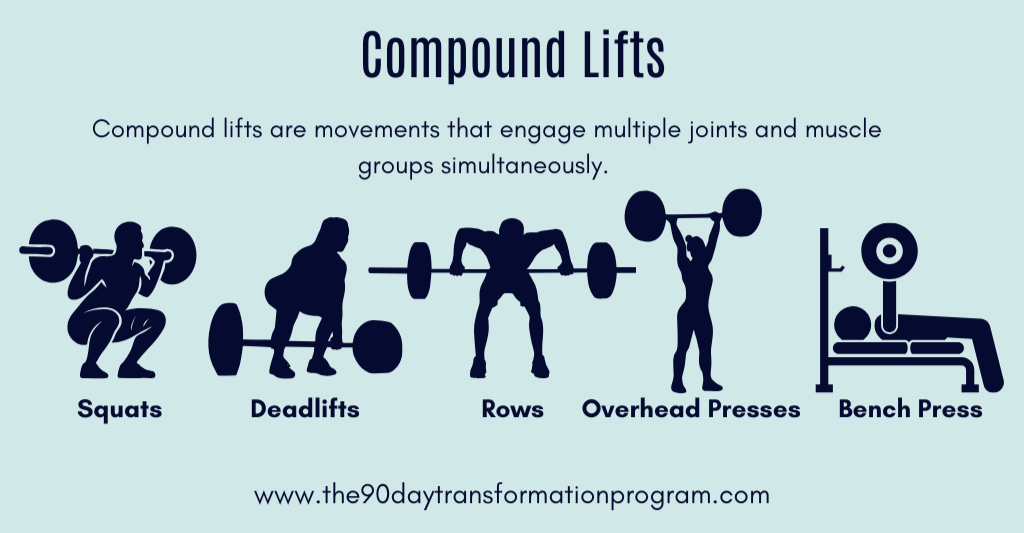
For most compound lifts: 3–5 sets x 6–8 reps
At a load that feels like 7–8/10 effort (2–3 reps left in reserve)
Why?
This range maximizes neuromuscular strength
Supports muscle retention
Promotes bone density adaptation
Avoids unnecessary fatigue from high-rep burnout training
For accessory movements: 2–3 sets x 8–12 reps
For power-based movements (optional but beneficial): 3–5 sets x 3–5 reps
Explosive intent (medicine ball throws, kettlebell swings, jump squats if appropriate)
Power declines earlier than strength with age — training it preserves functional capacity.
Rest Periods Matter
Women often rush rest.
Don’t.
For heavy compound lifts: 90–120 seconds rest
Short rest intervals shift the stimulus toward conditioning rather than strength.
If the goal is metabolic and structural protection (and it should be, unless you are training for something specific), recovery between sets is essential.
Progressive Overload Is The Key
Progressive overload does not always mean loading up more and more weight. Each week, you can progressively overload by doing any of the following:
Incrementally increasing weight
Increasing number of reps
Improve form quality and mind-muscle connection
Increase control under load (aka adding a tempo)
Adding pauses to the movement.
Without progression, adaptation stops.
The Non-Negotiables (Regardless of Split)
✔ 2–4 sessions per week
✔ 3–4 sets per compound movement
✔ 5–8 reps for primary lifts
✔ 90–120 sec rest
✔ Progressive overload weekly
✔ Adequate protein intake
Structure and consistency matters less than stimulus + recovery.
In Summary
Strength training is not an add-on.
If nutrition builds the foundation, strength training is the structural framework.
And it must be programmed and carried out with intention — not treated as a side exercise to cardio.