
What Women Should Know Before Using GLP-1 Medications
GLP-1 medications have become one of the most talked-about tools in weight loss. Originally developed to support blood glucose regulation, they are now widely prescribed for weight management due to their ability to reduce appetite and promote significant weight loss.
For many women, these medications can be highly effective. However, understanding how they work—and what they don't do—is essential for protecting muscle mass, metabolic health, and long-term results.
How GLP-1 Medications Work
GLP-1 is a naturally occurring hormone involved in appetite regulation, insulin secretion, and digestion. Medications that mimic GLP-1 increase feelings of fullness, slow gastric emptying, and reduce overall food intake.
As a result, many women find themselves eating significantly less without deliberately trying to restrict calories. This can make weight loss easier than traditional dieting alone.
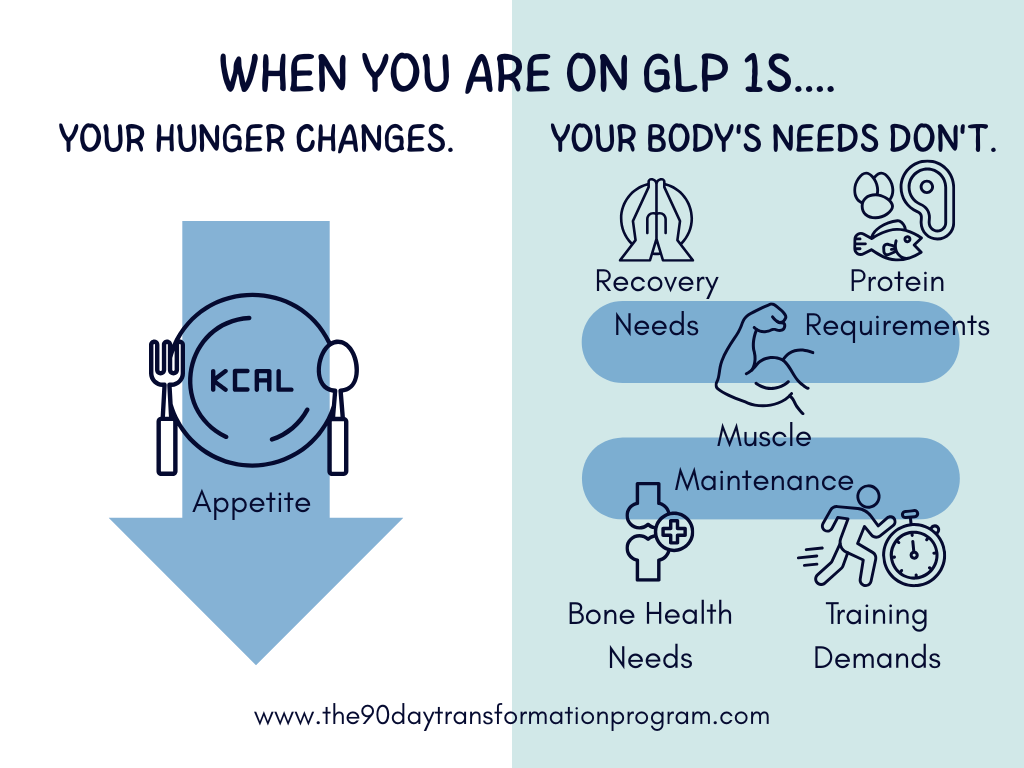
However, appetite suppression changes food intake—it does not change the body's physiological requirements. The body still needs adequate energy, protein, and nutrients to support recovery, muscle maintenance, and overall health.
Weight Loss Doesn't Automatically Mean Fat Loss
One of the most important things women should understand before starting a GLP-1 medication is that weight loss is not tissue-specific.
When calorie intake drops substantially, the body draws energy from multiple sources. Fat mass may decrease, but muscle tissue can also be lost if steps aren't taken to preserve it.
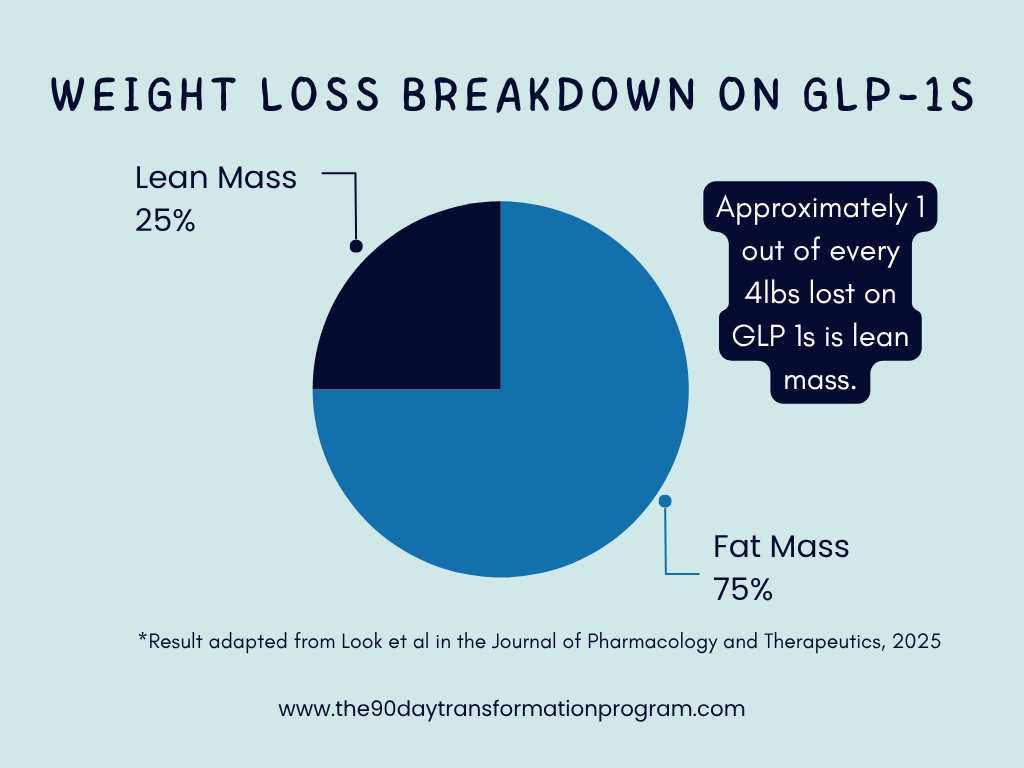
Recent reviews suggest that 20–40% of total weight lost during GLP-1 therapy may come from lean mass, highlighting the importance of resistance training and adequate protein intake to preserve muscle during weight loss.
This distinction matters because muscle plays a critical role in metabolic health, strength, bone density, and long-term weight maintenance. Losing weight while maintaining muscle is very different from simply losing weight.
Why Muscle Preservation Matters
Muscle is often viewed through the lens of appearance, but its role extends far beyond how the body looks.
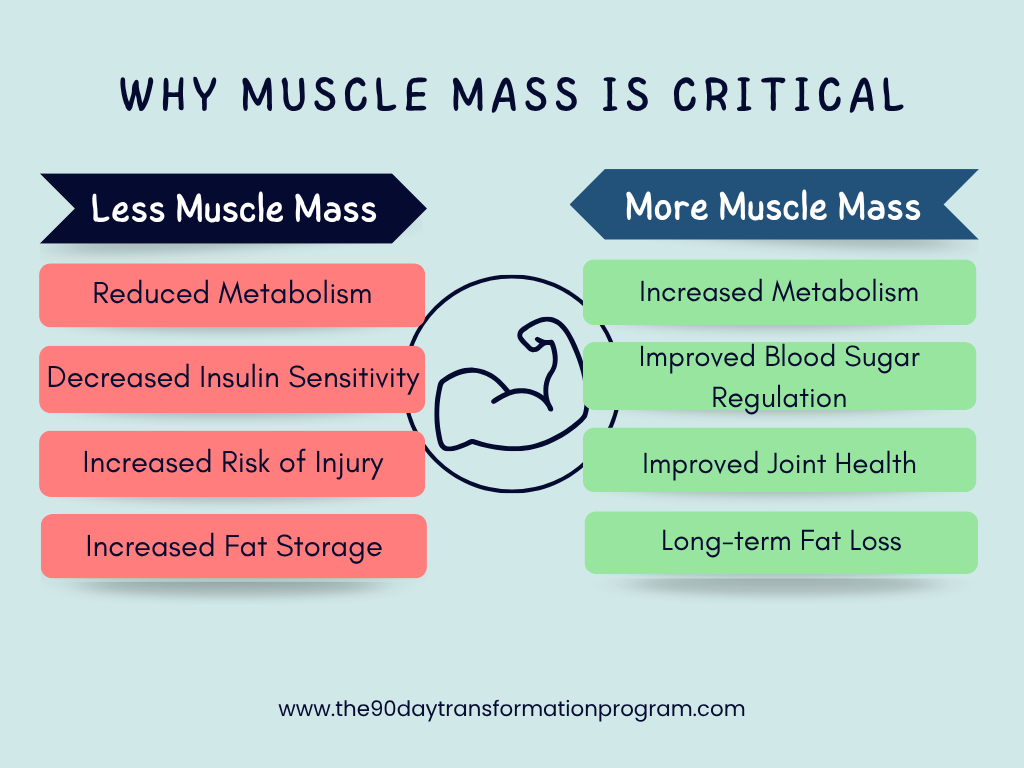
Skeletal muscle supports:
Glucose regulation
Insulin sensitivity
Resting metabolic rate
Bone loading and skeletal health
This becomes particularly important during midlife, when age-related muscle loss is already beginning to accelerate.
Without resistance training and adequate protein intake, some of the weight lost while using GLP-1 medications may come from lean tissue. Over time, this can reduce strength, lower metabolic efficiency, and increase the likelihood of weight regain once medication is discontinued.
Nutrition Becomes More Important, Not Less
A common misconception is that if appetite is lower, nutrition becomes less important.
In reality, the opposite is often true.
When food volume decreases, every meal needs to work harder to provide the nutrients the body requires. Protein intake often falls unintentionally, increasing the risk of muscle loss. Micronutrient intake may also decline, particularly nutrients involved in bone health, recovery, and energy production.
Rather than focusing solely on eating less, women using GLP-1 medications often benefit from focusing on eating more strategically.
Training May Need to Be Adjusted
Many women notice that exercise feels different while taking a GLP-1 medication.
Reduced energy intake can affect recovery capacity, training performance, and tolerance for higher training volumes. Some women experience increased fatigue, slower recovery, or reduced workout performance despite maintaining their usual routine.
This does not mean exercise should be avoided. In fact, resistance training often becomes even more important during this phase because it provides a stimulus for preserving muscle mass during weight loss.
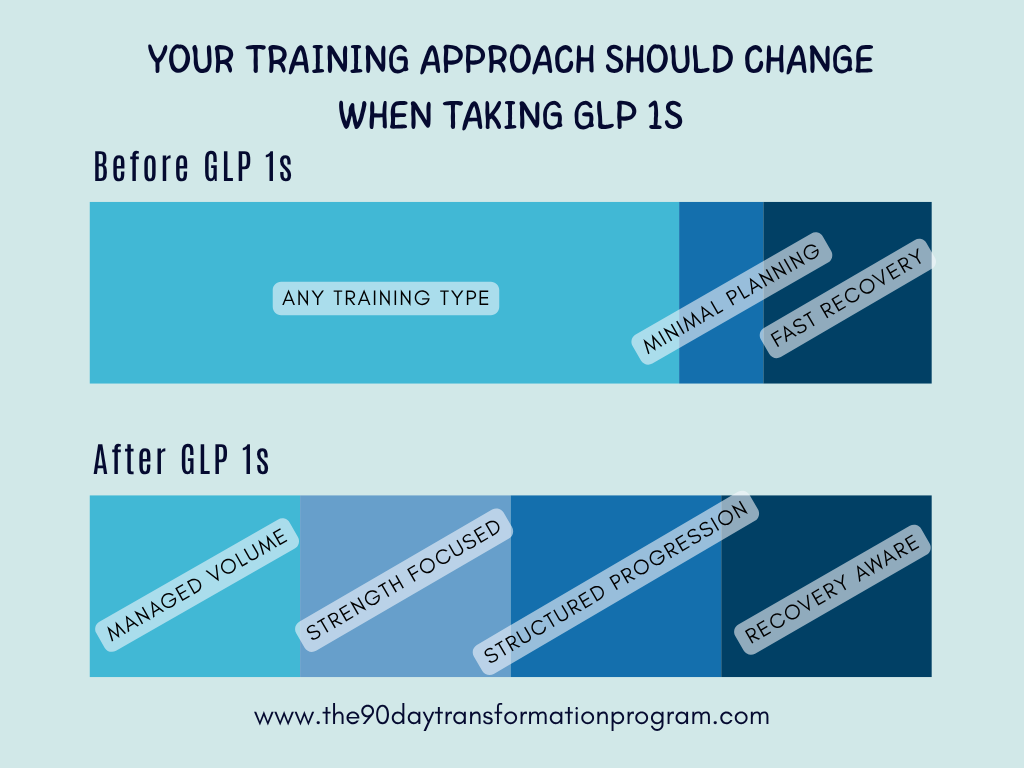
The goal is not necessarily to train harder, but to ensure training, nutrition, and recovery remain aligned.
GLP-1s Are a Tool, Not a Complete Solution
GLP-1 medications can be highly effective for weight loss, but they do not automatically preserve muscle, maintain bone density, protect metabolic rate, or build physical resilience.
Those outcomes still depend on the same foundations that support health regardless of medication use: strength training, adequate protein intake, sufficient energy availability, and consistent recovery habits.
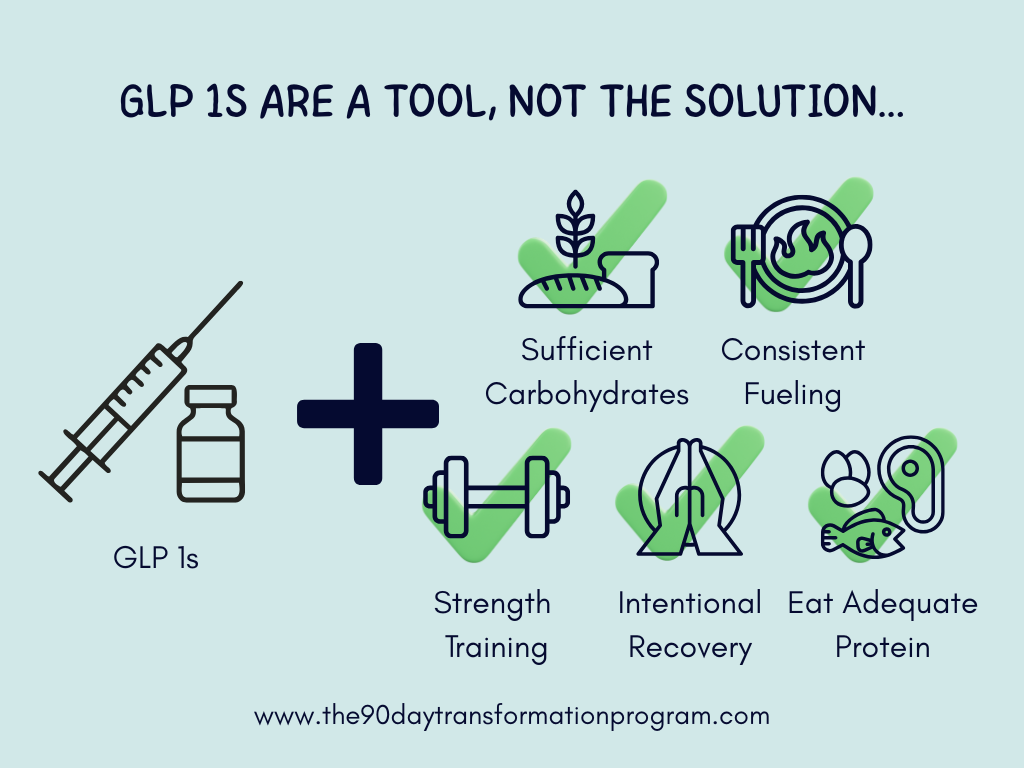
Medication can support the process, but it cannot replace these fundamentals.
In Summary
GLP-1 medications may be an appropriate tool for some women when prescribed and monitored correctly. However, successful long-term outcomes depend on more than the number on the scale.
The women who tend to achieve the best results are not simply those who lose the most weight. They are the women who preserve muscle, maintain strength, support their metabolism, and build habits that remain sustainable long after the medication is discontinued.
The goal should not simply be weight loss.
The goal should be becoming a stronger, healthier, and more resilient version of yourself in the process.