
Why Fasted Training Is Rarely Appropriate for Women over 30

Fasted training is often promoted as a strategy to improve fat loss or metabolic efficiency.
Most of this research, however, has been conducted in male populations. Applying these strategies directly to women overlooks key differences in how the female body responds to energy availability and stress.
For many women—particularly those training regularly or managing higher life stress—fasted training can increase physiological strain rather than improve outcomes.
Myths and Mistakes Around Fasted Training
Some of the most common myths and mistakes associated with fasted training include:
Assuming fasted training accelerates fat loss
Using fasted cardio to “offset” food intake
Performing high-intensity training without fuel
Ignoring fatigue and recovery signals
These patterns often increase stress while reducing training effectiveness.
What’s Happening Physiologically
Training increases the body’s demand for energy.
When exercise is performed without prior fueling (aka. training fasted):
The body relies more heavily on stress hormones (particularly cortisol) to mobilize energy.
Glycogen availability is reduced, limiting performance capacity.
Muscle protein breakdown may increase in the absence of circulating amino acids.
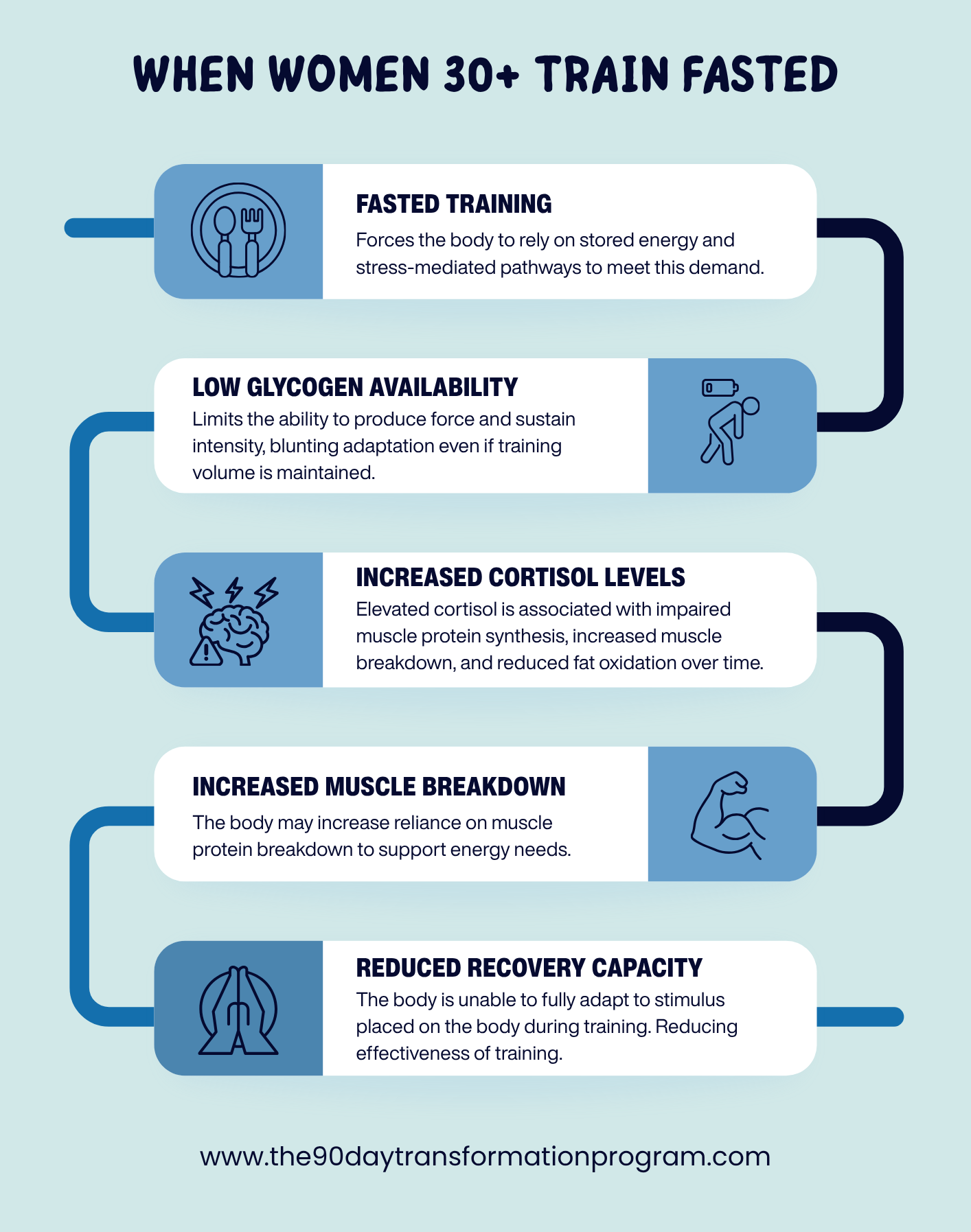
While this can be tolerated occasionally, repeated exposure increases total physiological stress.
Women appear to be more sensitive to this combination of training stress + low energy availability, which can signal a state of energy scarcity to the body.
Cortisol, Hormones, and Muscle Preservation
Cortisol plays an important role in energy mobilization during exercise. Acute stress and elevated cortisol during exercise is normal and helps to promote adaptation.
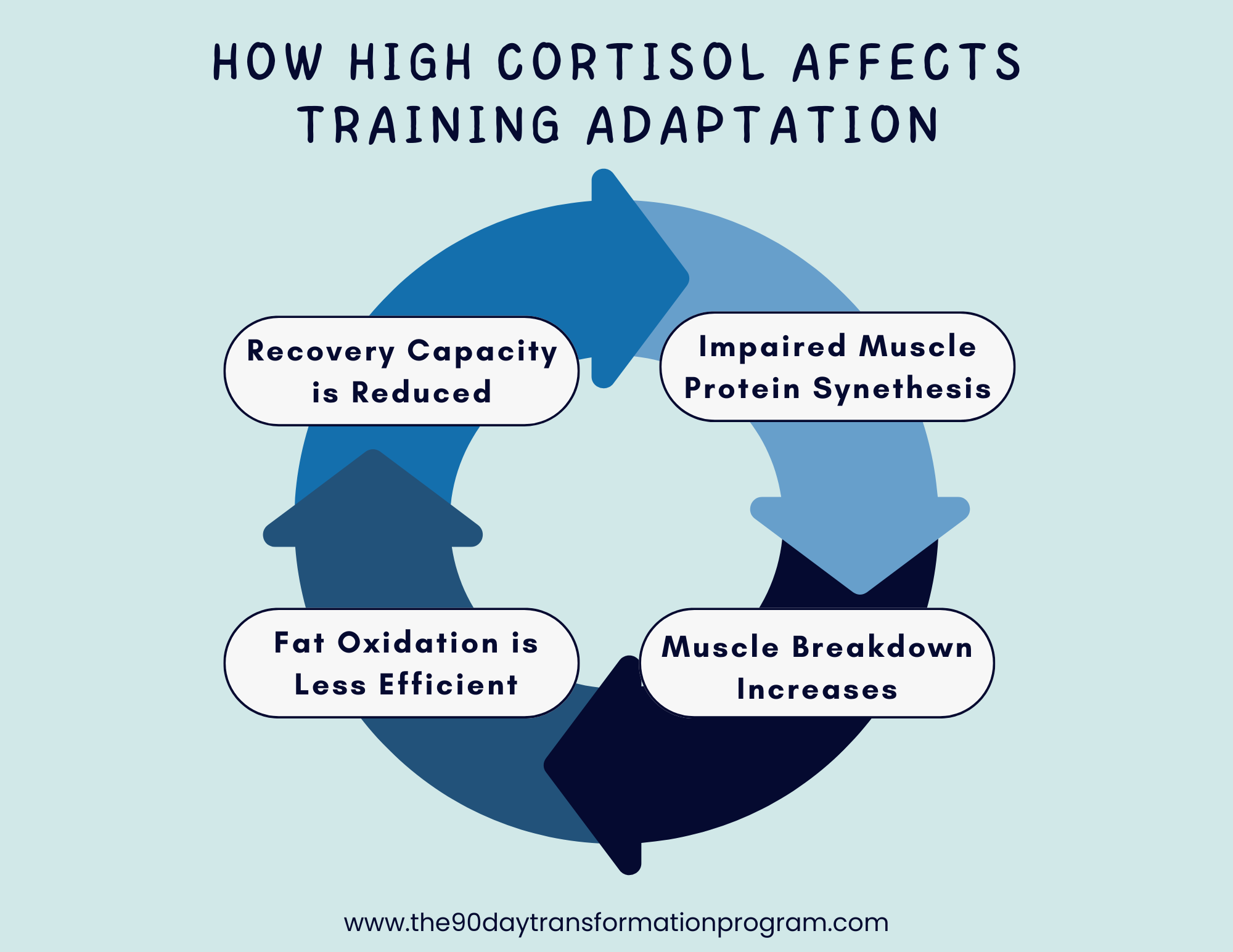
However, when elevated repeatedly or consistently:
Muscle protein synthesis can be impaired.
Muscle breakdown may increase.
Fat oxidation may become less efficient over time.
Recovery capacity is reduced.
In women, these effects are compounded by interactions with reproductive hormones. Repeated fasted training may contribute to disrupted hormonal signaling and reduced adaptation.
Impact on Training Quality
Fasted training often reduces the quality of the training session itself.
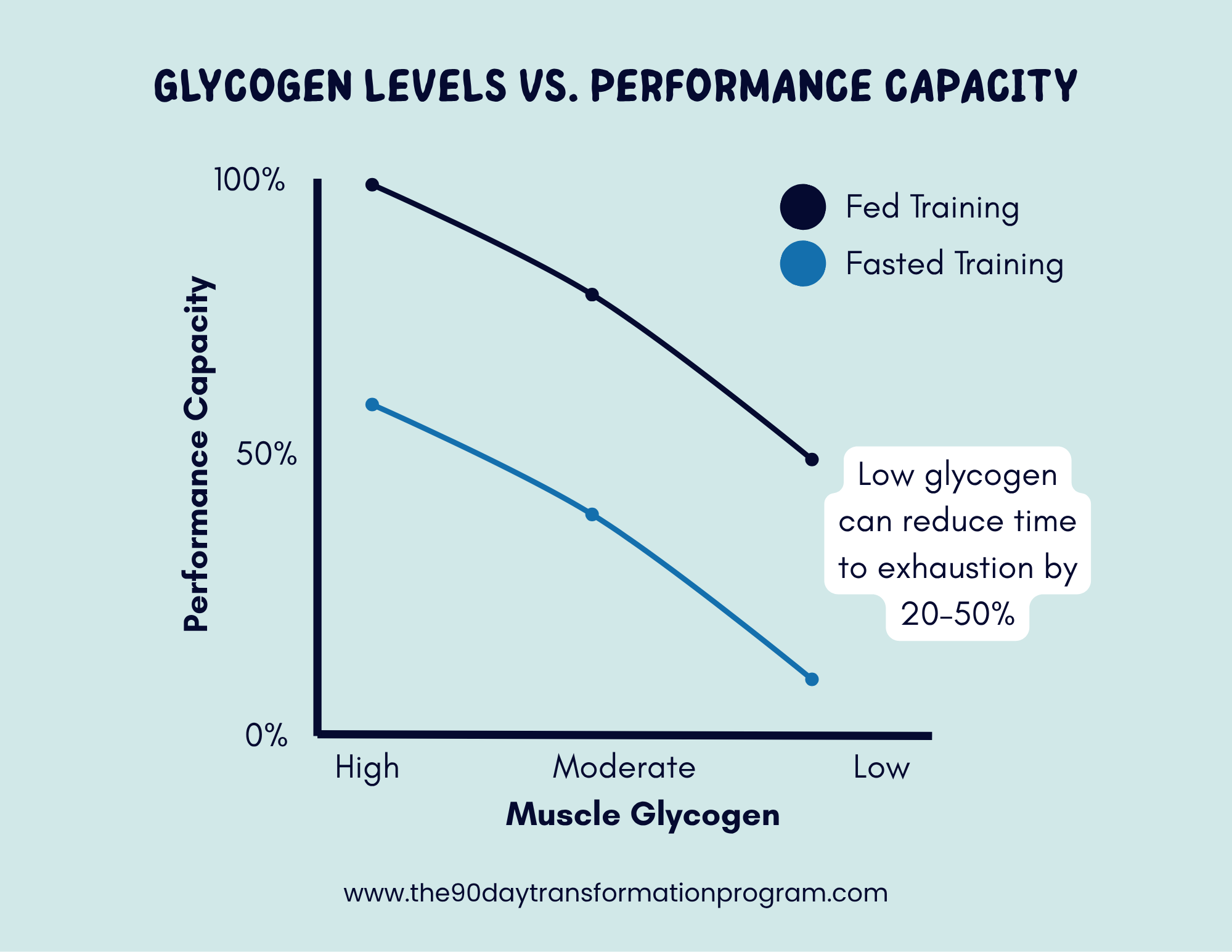
Lower glycogen availability can lead to:
Reduced strength output
Decreased ability to sustain intensity
Lower overall training stimulus
This is particularly relevant for resistance training and higher-intensity conditioning, where performance drives adaptation.
Training quality is a primary driver of results — not simply whether the session is performed in a fasted state.
Practical Implications for Training and Nutrition
Fueling before training supports the conditions required for adaptation.
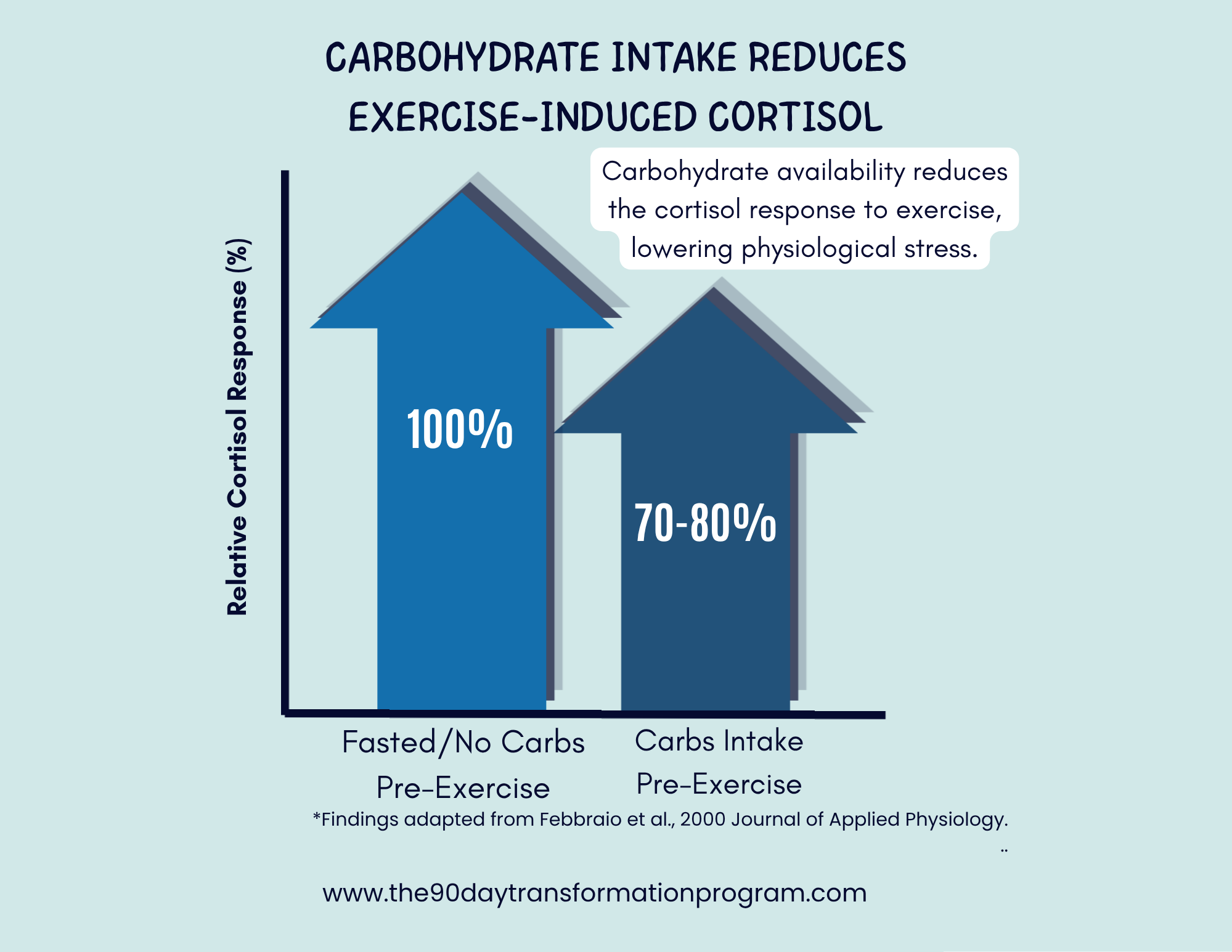
Consuming protein and carbohydrates prior to training can:
Reduce excessive cortisol response
Improve training performance
Provide amino acids for muscle repair
Support recovery after the session
The recommended targets to consume prior to exercise are:
~15g protein
~30g carbs
Examples:
Greek yogurt + berries
Half a banana + peanut butter
Importantly, this does not prevent fat loss. It supports the physiological environment needed for sustainable fat loss and muscle preservation.
In Summary
Fasted training is not inherently harmful, but it is rarely necessary and often counterproductive for women.
For women over 30, aligning fueling with training demands supports:
Better performance
Improved recovery
Preservation of lean muscle mass
More sustainable fat loss outcomes
Training should enhance adaptation — not increase unnecessary physiological stress.
References
Febbraio, M. A., Chiu, A., Angus, D. J., Arkinstall, M. J., & Hawley, J. A. (2000). Effects of carbohydrate ingestion before and during exercise on glucose kinetics and performance.
Journal of Applied Physiology, 89(6), 2220–2226.
Hawley, J. A., & Leckey, J. J. (2015). Carbohydrate dependence during prolonged, intense endurance exercise. Sports Medicine, 45(S1), 5–12.
Leveritt, M., & Abernethy, P. J. (1999). Effects of carbohydrate restriction on strength performance.
Journal of Applied Physiology, 87(6), 2220–2224.
Tipton, K. D., Rasmussen, B. B., Miller, S. L., Wolf, S. E., Owens-Stovall, S. K., Petrini, B. E., & Wolfe, R. R. (2001). Timing of amino acid-carbohydrate ingestion alters anabolic response of muscle to resistance exercise. American Journal of Physiology-Endocrinology and Metabolism, 281(2), E197–E206.
Schoenfeld, B. J., Aragon, A. A., Wilborn, C. D., Krieger, J. W., & Sonmez, G. T. (2014). Body composition changes associated with fasted versus non-fasted aerobic exercise. Journal of the International Society of Sports Nutrition, 11(1), 54.
Loucks, A. B., Kiens, B., & Wright, H. H. (2011). Energy availability in athletes. Journal of Sports Sciences, 29(S1), S7–S15.
De Souza, M. J., Koltun, K. J., Williams, N. I., & Joy, E. A. (2019). The role of energy availability in reproductive function in women exercising for weight control. Sports Medicine, 49(S2), 87–96.