
How Your Training Needs to Change After 30

Training after 30 does not require doing less.
It requires being more intentional.
The physiological context changes. Adaptation still occurs — but it responds better to structure, recovery awareness, and quality over quantity.

Muscle Preservation Becomes Foundational
From the early 30s onward, lean muscle mass gradually declines in the absence of resistance training.
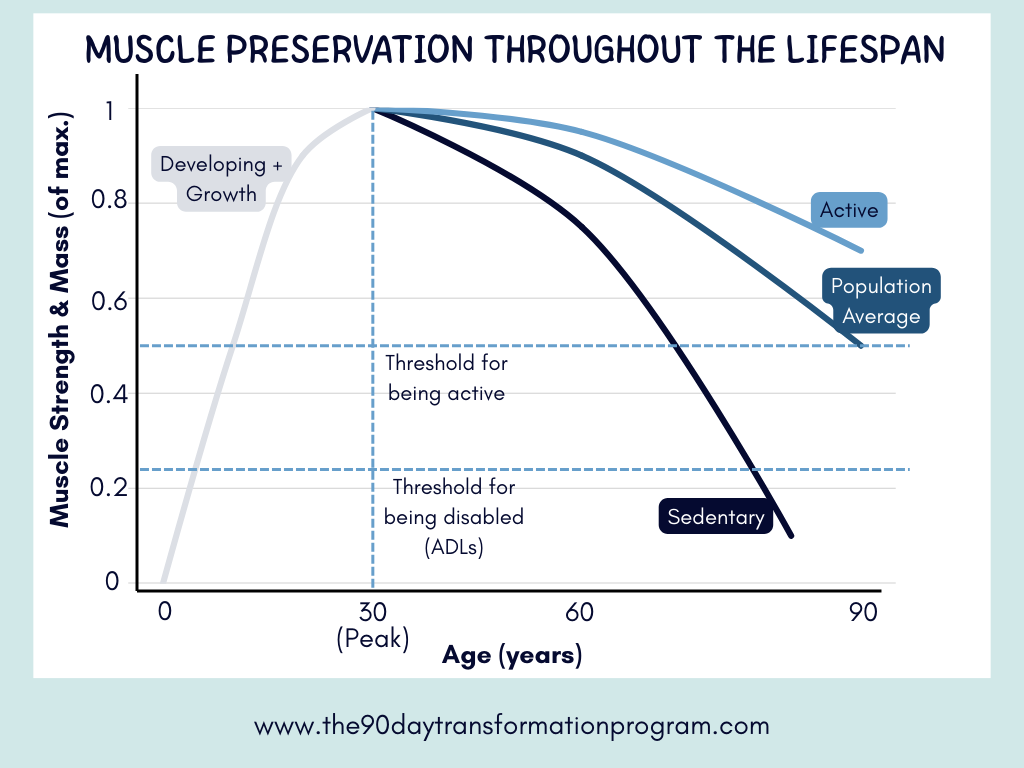
Over time, this contributes to:
Reduced resting metabolic rate
Decreased insulin sensitivity
Greater susceptibility to fat gain
For women after 30, your workout routine should center around strength training. It preserves muscle, supports bone density, and maintains metabolic stability. The goal is no longer simply calorie burn — it is structural preservation.
You can read more here: Why Building Muscle Is A Non-Negotiable For Women After 30
Recovery Capacity Narrows
After 30, total stress load tends to increase.
Work demands, family responsibilities, psychological stress, and sleep disruption all accumulate. Hormonal variability also becomes more influential, even before perimenopause.

This reduces tolerance for excessive training volume.
What once felt manageable may now produce persistent fatigue, stalled progress, or nagging injury.
Recovery must be programmed, not assumed.
Read More: What is Recovery and How Important Is It For Women 30+?
Volume Matters More Than Intensity
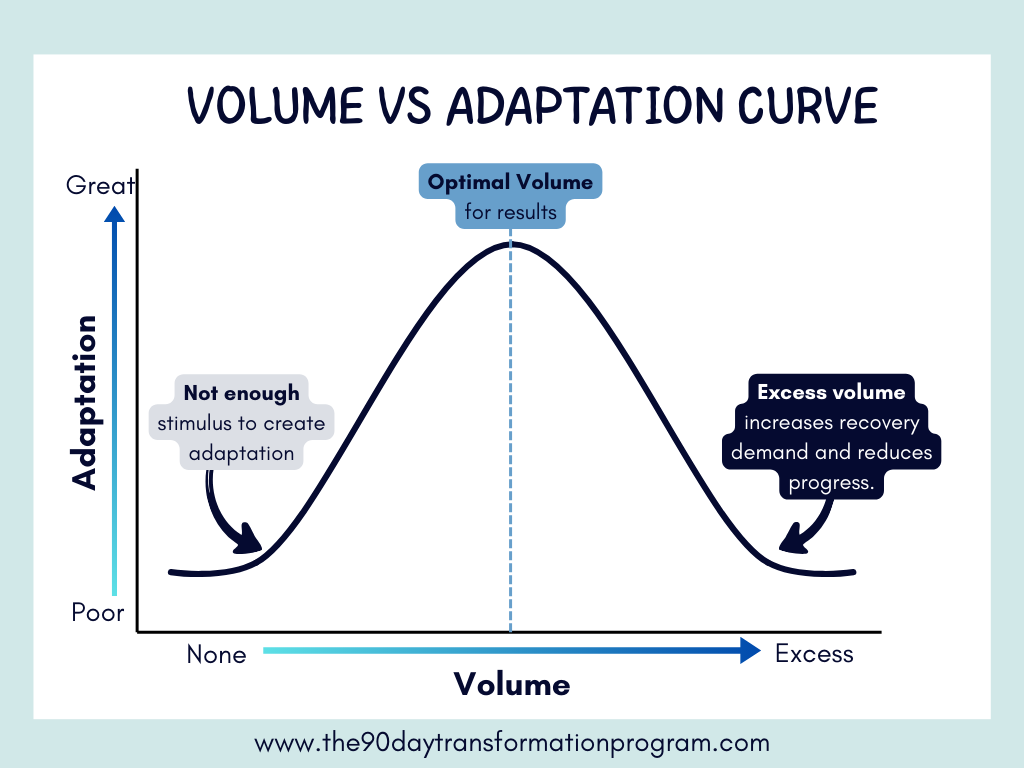
High-volume training often creates diminishing returns.
Excessive volume:
Elevates cumulative stress
Increases cortisol exposure
Extends recovery timelines
Blunts adaptation
Maintaining appropriate intensity while moderating total volume allows for better strength gains and improved recovery.
After 30, quality of work matters more than quantity of work.
Connective Tissue Requires More Patience
Muscle adapts relatively quickly.
Tendons and ligaments adapt more slowly.

A study in the 2024 Scandinavian Journal of Medicine & Science in Sports by Lambrianides et al. tested the difference in muscle-tendon adaptation of participants following a 12 week training program came to the conclusion that ‘tendon adaptations may not keep up with muscle adaptations, which could potentially increase the risk for tendon overuse injuries’.
Without gradual progression and sufficient recovery, overuse injuries become more likely. Structured warm-ups, progressive loading, and movement variation become protective variables rather than optional additions.
Cardiovascular Training Requires Refinement
Aerobic training remains valuable, but excessive reliance on moderate-intensity cardio can increase stress without preserving lean mass.
A more effective approach includes:
Strength training as the foundation
Lower-intensity aerobic work for cardiovascular health
Strategic, shorter bouts of higher-intensity conditioning
This supports metabolic function without overwhelming recovery capacity.
Read More: Cardio for Women — Helpful, Harmful, or Misused?
Nutrition and Training Must Align

Training stress without adequate fuel undermines adaptation.
After 30, preserving lean mass requires:
Sufficient total energy intake
Adequate protein
Carbohydrates to support training performance and recovery
When fueling does not match training demand, progress slows — regardless of effort.
In Summary
After 30, training works best when it prioritizes:
Strength as the foundation
Managed training volume
Structured recovery
Progressive overload
Consistent fueling
Ambition does not need to decrease.
Intentionality needs to increase.
When training aligns with physiology, progress remains achievable — and sustainable — well beyond your 30s.