
What is Recovery and How Important Is It For Women 30+?

Training only works if the body can recover from it.
Recovery is often framed as a secondary consideration in training, prioritized only when fatigue becomes unmanageable or injury occurs.
This is incorrect.
For women, recovery is actually a central determinant of whether training produces positive adaptation or physiological disruption.
Without adequate recovery, even well-designed exercise programs can become counterproductive.
What is Recovery and Why is it Important?
Adaptation Happens During Recovery - Not The Workout
From a biological standpoint, training is a stressor.
Exercise challenges the musculoskeletal system, the nervous system, and metabolic pathways. It temporarily disrupts homeostasis.
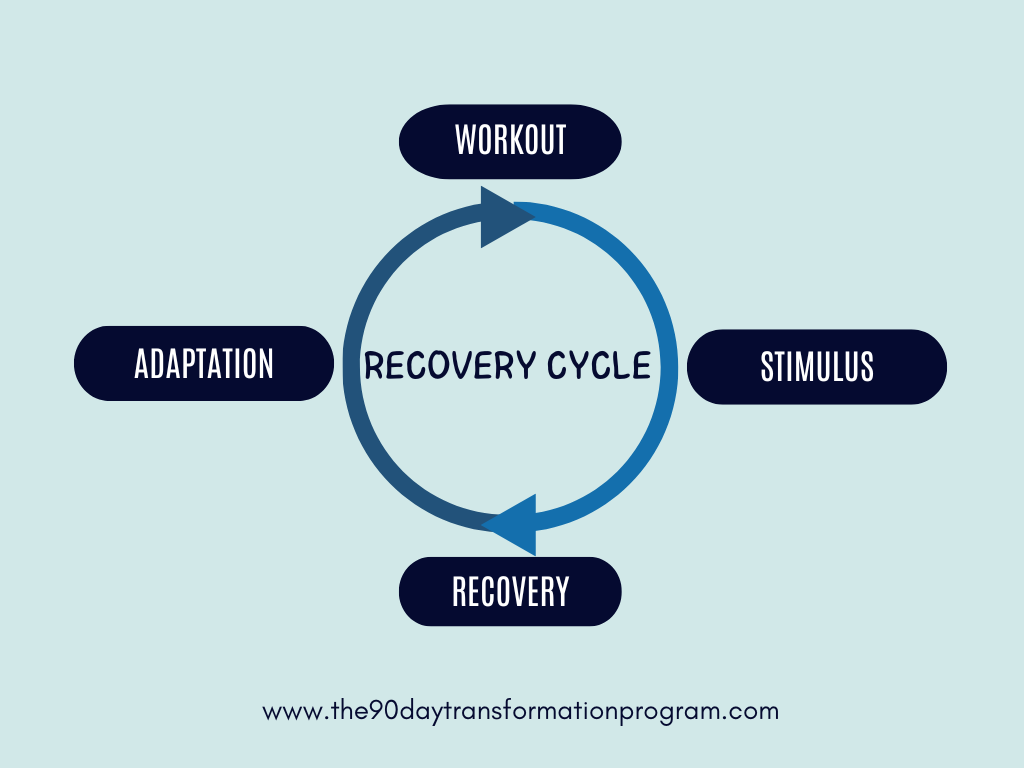
That disruption is the stimulus.
The adaptation happens later.
During recovery, the body:
Repairs muscle tissue
Replenishes glycogen stores
Recalibrates hormonal signaling
Restores nervous system balance
If recovery is sufficient, the body adapts and improves.
If recovery is insufficient, stress accumulates.
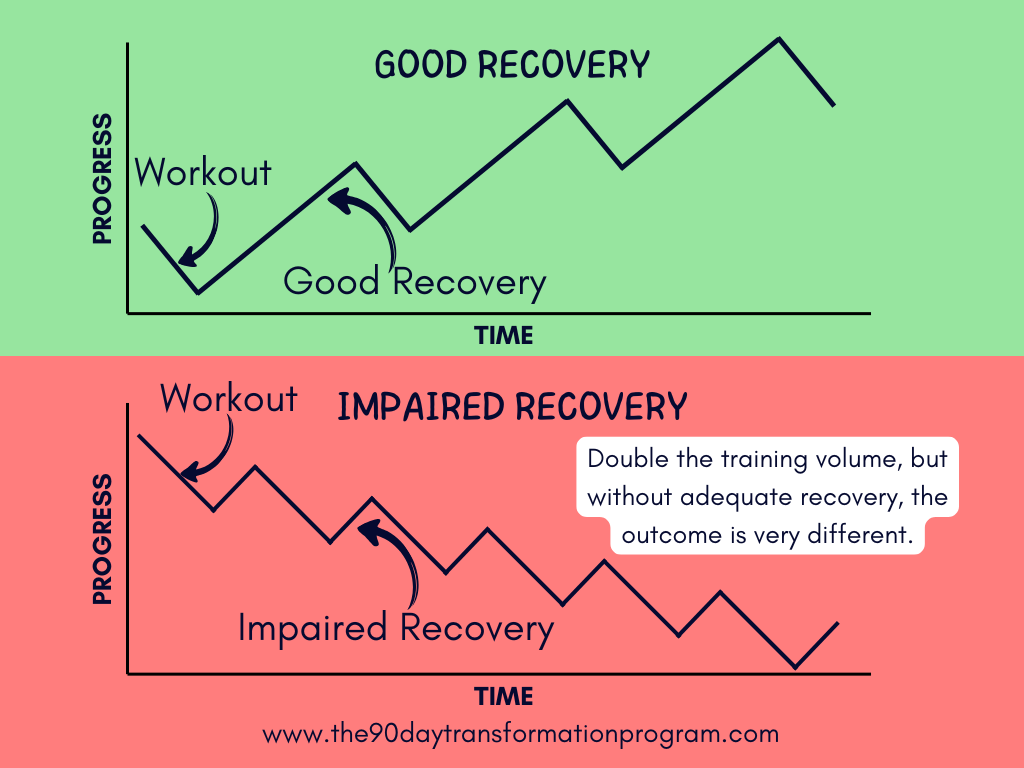
When that happens, the body does not improve. It protects.
What Happens When Recovery Is Inadequate?
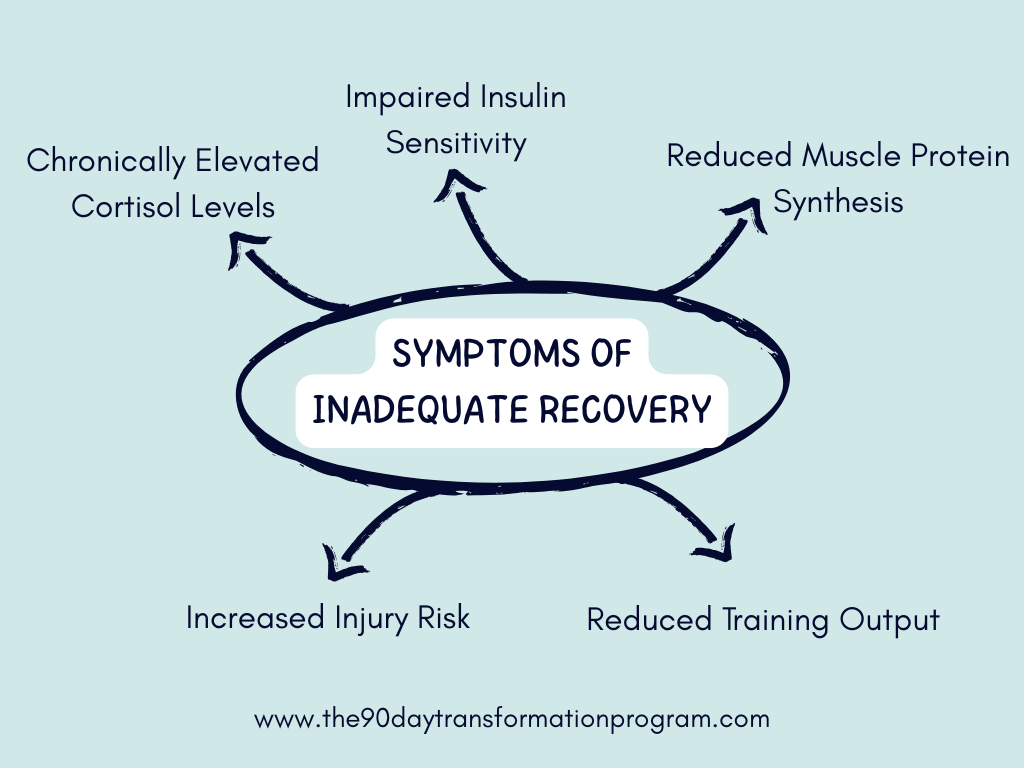
Chronic under-recovery is associated with:
Elevated cortisol
Impaired insulin sensitivity
Reduced muscle protein synthesis
Increased injury risk
Declining training output
Women often describe this as feeling “tired but wired.”
This is not a motivation issue.
It is a recovery issue.
Without adequate recovery, rather than improving metabolic function, the body shifts toward conservation.
As a result, fat loss becomes harder, not easier.
The Hormone-Recovery Interaction
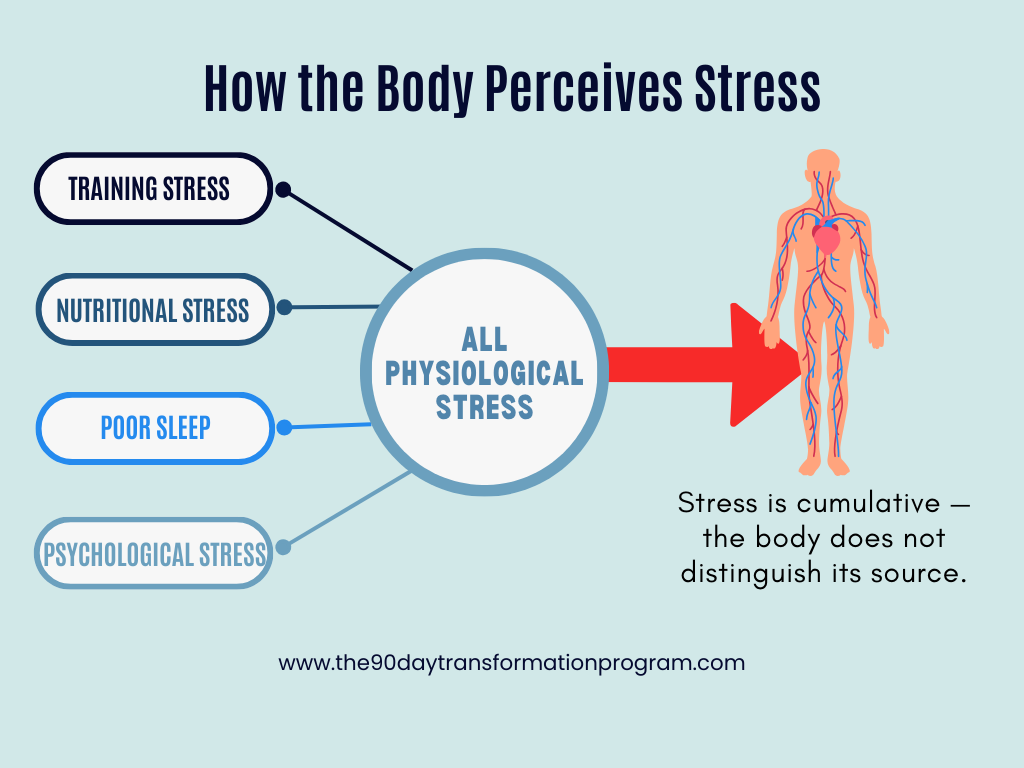
Women are particularly sensitive to cumulative stress because recovery capacity is influenced by:
Training load
Energy availability
Sleep quality
Additional Life Stress
You Can Read: Why Women and Men are Not the Same in Training and Nutrition
When recovery resources are inadequate, the nervous system is one of the first affected. Meaning hormonal signaling becomes less efficient.
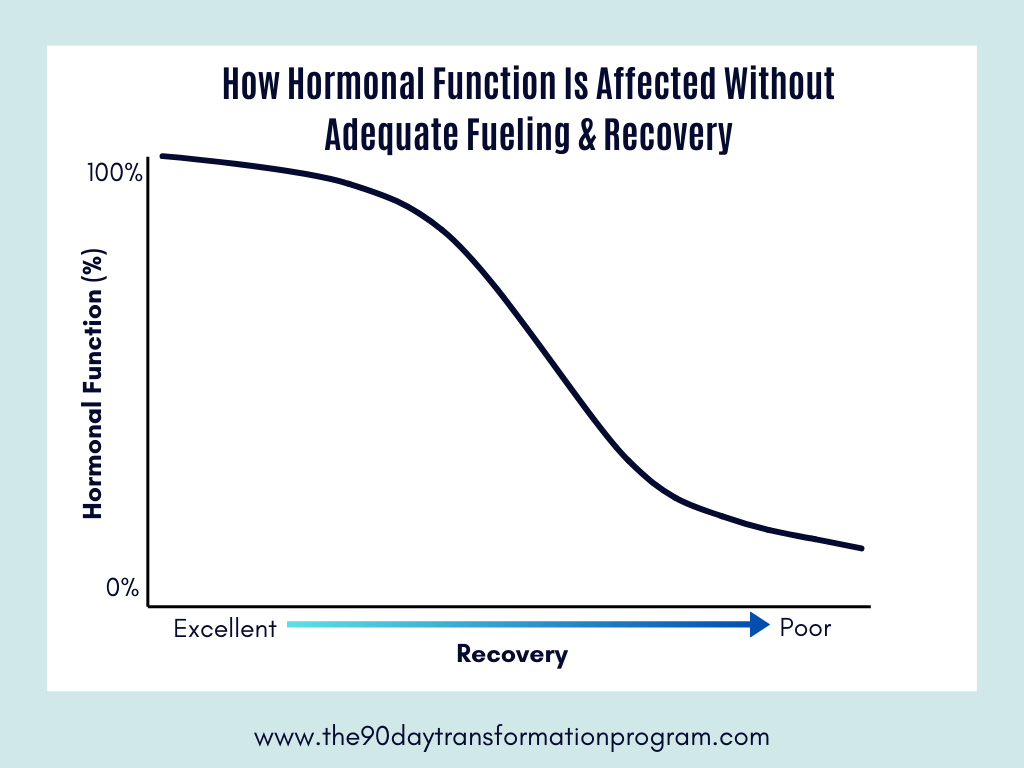
Our reproductive hormones; estrogen and progesterone influence:
Connective tissue integrity
Substrate utilization (fat vs carbohydrate use)
Nervous system regulation
When estrogen signaling declines:
Recovery slows
Injury risk increases
Fat distribution shifts
Insulin sensitivity declines
One study done on post-menopausal women shows that psychological and physiological stress can suppress estradiol (a subsection of estrogen) production, particularly when paired with low energy availability.
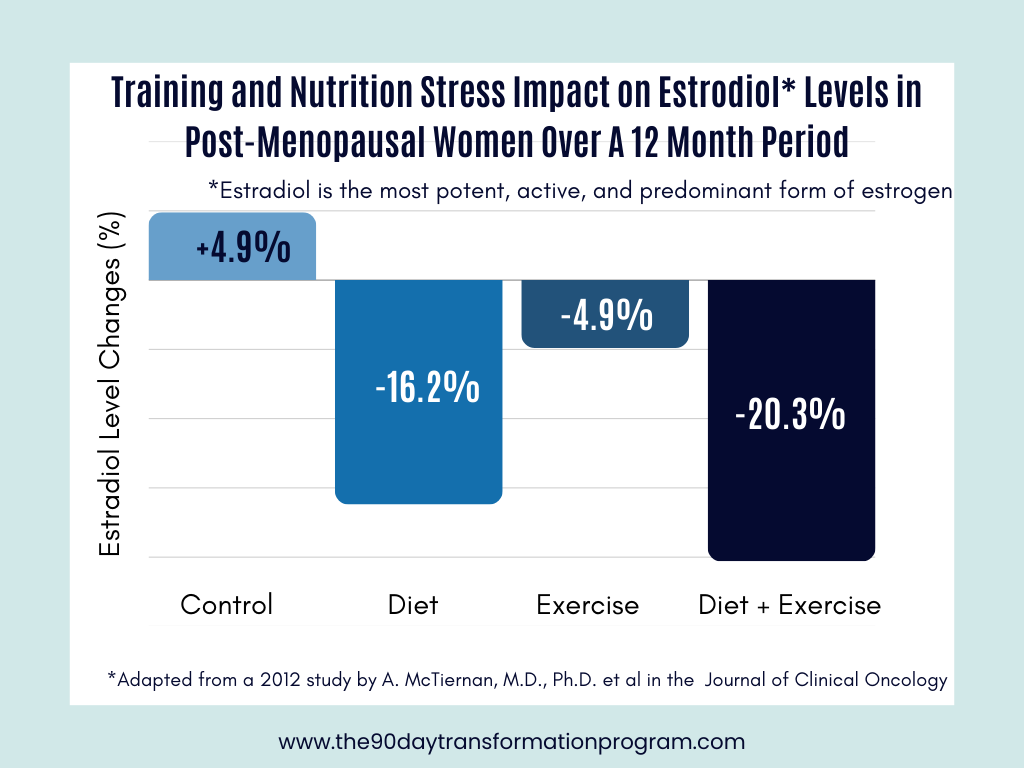
The metabolic consequences of poor recovery are also significant. Chronic stress amplifies this process.
Cortisol remains elevated.
Muscle repair is blunted.
Fat oxidation decreases.
The body becomes resistant to change, often resulting in frustration when effort fails to produce expected outcomes.
Muscle Is Built in Recovery
Resistance training stimulates muscle protein synthesis.
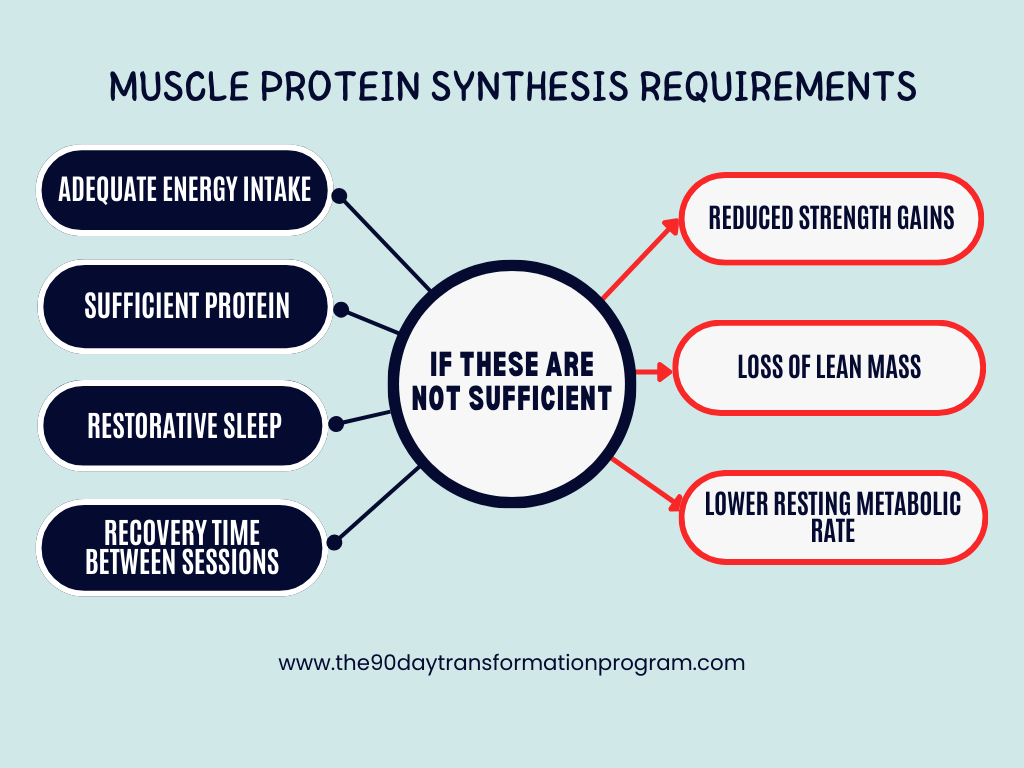
But that process requires:
Adequate energy intake
Sufficient protein
Restorative sleep
Recovery time between sessions
Without these inputs, muscle repair is incomplete.
Over time this leads to:
Reduced strength gains
Loss of lean mass
Lower resting metabolic rate
The very outcomes women are trying to avoid.
Read More: Why Building Muscle Is A Non-Negotiable For Women After 30
Injury Risk and Connective Tissue
Tendons and ligaments adapt more slowly than muscle. They require loading followed by adequate recovery.
When loading continues without sufficient recovery:
Microtrauma accumulates
Overuse injuries develop
Joint pain increases
Women may be more susceptible due to hormone-related connective tissue variability across cycles and life stages.
Overtraining Doesn’t Require Extreme Programs
Most women who experience overtraining are not training excessively.
They are training moderately while ALSO:
Under-fueling
Sleeping poorly
Experiencing additional life stress
The combination — not the workout alone — creates overload.
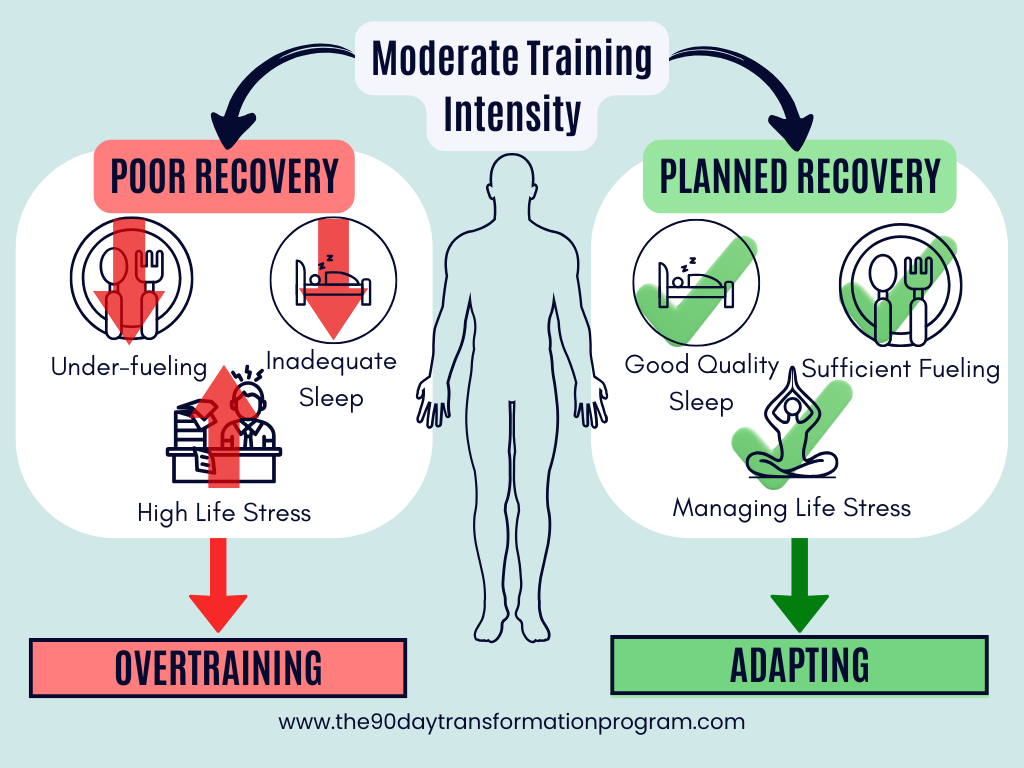
Symptoms of overtraining appear gradually:
Persistent fatigue
Increased soreness
Stalled fat loss
Mood changes
Reduced performance
What Does Good Recovery Look Like?
Recovery Is an Input — Not a Reward
Effective training strategies account for recovery as a primary variable rather than an afterthought.
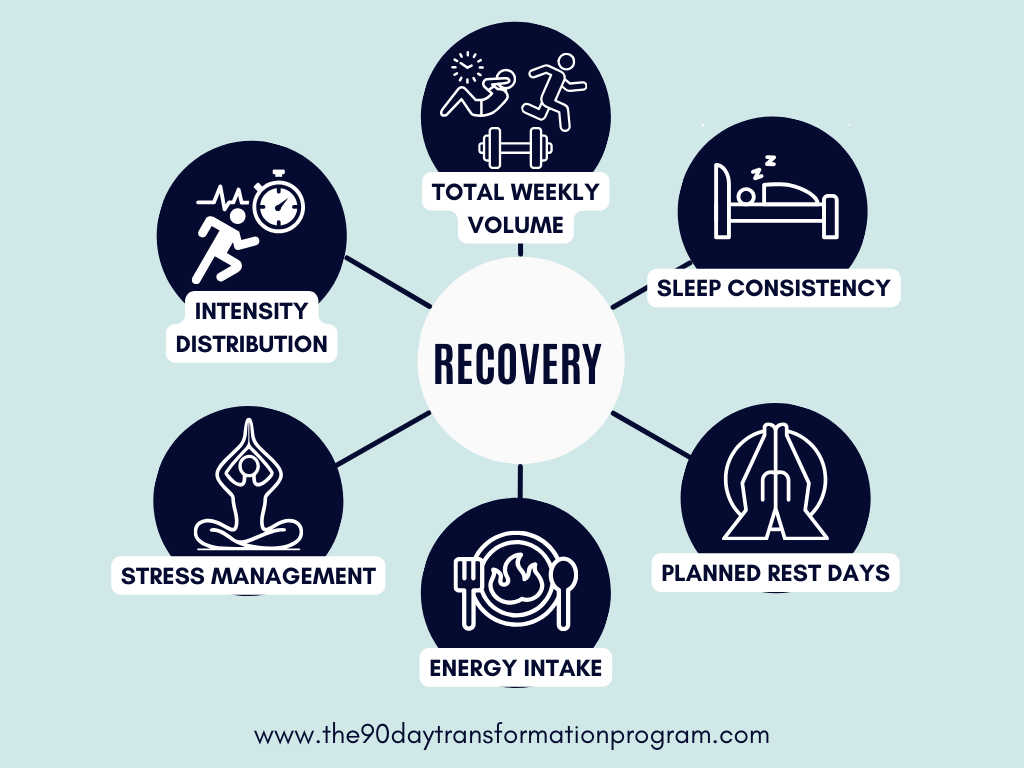
Recovery includes:
Total weekly volume
Intensity distribution
Planned rest days
Energy intake
Sleep consistency
Psychological stress management
It must be built into the program.
Even a workout routine that appears moderate on paper may still exceed recovery capacity if any of these factors are misaligned.
Recovery should be planned, not ‘earned’.
How To Apply This To Your Workout Routine
Things to consider when planning your workouts;
1. Volume & Intensity Control
Strength Sessions
Total weekly = 3
Compound Lifts
Rest: 2–3 minutes between heavy sets.
HIIT Session= 1
Total Weekly = 1
Can be programmed at the end of a strength workout.
Intervals
Low Intensity Cardio
Total Weekly = 1
Can be programmed when cortisol is high.
E.g. Between strength days.
30-40 mins of Zone 2 Cardio
Fuel normally. No calorie cutting.
2. Fuel Alignment
Before Training (30–60 min prior)
20–30g carbs + 10–15g protein
Blunts cortisol response
Improves training output.
Example: Greek yogurt + berries
Post-Workout (within 30 min)
25–30g protein + 40–60g carbs (if it was high demand)
Supports muscle protein synthesis
Glycogen restoration
Cortisol regulation
Example: Protein shake + banana + oats
3. Sleep Priority
Minimum = 7 hours.
If sleep < 6 hrs ➡️ Reduce training load by 10–20%.
4. Deload Every 4–6 Weeks
Reduce volume by 30–40%
Connective tissue and nervous system need unloading.
Keep moderate intensity
Example Training Week
Read More About Training Splits/Set & Rep Ranges here: How to Strength Training If You’re a Women Over 30
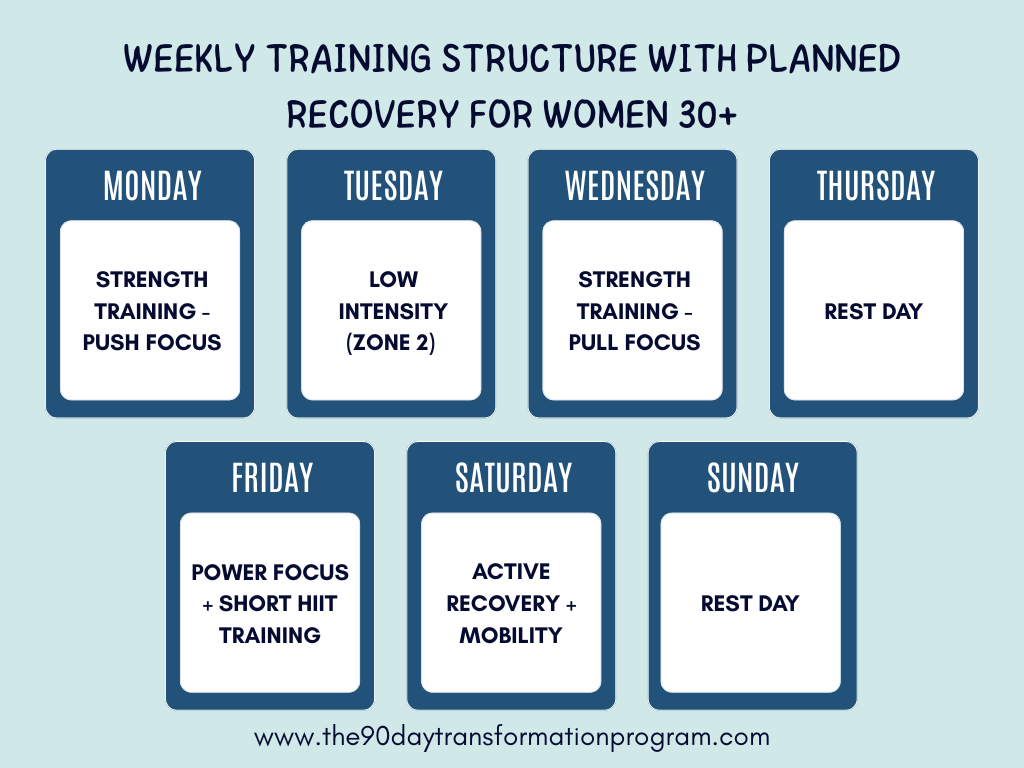
Monday: Strength Training (Push Focus)
Compound lifts: Squat, Chest Press, Split squat, Overhead Press
Rest: 2–3 minutes between heavy sets.
Tuesday: Low Intensity Cardio Workout
Zone 2 cardio e.g. walking, incline treadmill, cycling.
30–40 minutes
Mobility work (optional)
10–15 minutes
Wednesday: Strength Training (Pull Focus)
Compound lifts: Deadlift, Row, Pull-down + Accessory work.
Rest 2 min between compound lift sets.
Thursday: REST DAY
Friday: Strength (Power Focus) + HIIT Finisher
Pre-fueled (do not do fasted).
Warm-up thoroughly.
Power work: E.g. Box jump, Med ball slams
Short HIIT: Interval Sprints
6 x 30 sec hard
90 sec full recovery
Total session under 45 min.
Saturday: Active Recovery
Low intensity cardio (optional)
10-15 mins
Mobility work
10–15 minutes
Sunday: REST DAY
In Summary:
Recovery determines whether training builds or breaks the body.
For women, progress is not driven by constant intensity or maximal effort. It is driven by the ability to recover, adapt, and repeat training over time.
When recovery is prioritized, training becomes a sustainable process that supports long-term health, strength, and resilience.